Leave Your Message

China Best Puffer Jacket Men Supplier for Global Buyers

Choosing a China Best Puffer Jacket Men Supplier requires more than comparing factory prices. Global buyers need reliable quality, clear communication, and practical production experience. A dependable supplier should understand insulation performance, fabric protection, sizing consistency, and seasonal delivery pressure. These details influence customer reviews and repeat orders.

A professional Puffer Jacket Men supplier can provide fabric samples, filling options, size charts, and pre-production samples. Recycled polyester, nylon, down, and synthetic insulation each offer different benefits. Buyers should inspect stitching, zipper movement, cuff recovery, and seam protection. Small defects matter. A loose thread near the pocket can become a costly return.

Factory capability should be verified through product records, quality procedures, and transparent communication. Ask about minimum order quantities, sampling time, inspection standards, packaging, and shipping support. Independent testing may help confirm warmth, colorfastness, fabric composition, and safety requirements in the target market. Certifications should be checked carefully, not accepted as decoration.

Real experience still matters.

Some suppliers perform well on samples but struggle during bulk production. That gap deserves attention. A clear approval process, random inspections, and written specifications can reduce uncertainty. Buyers should also consider response speed when discussing changes, such as a longer sleeve, stronger snap buttons, or a custom logo. The best partnership is rarely built on the lowest quote alone. It grows through consistent evidence, honest limitations, and measurable improvement.
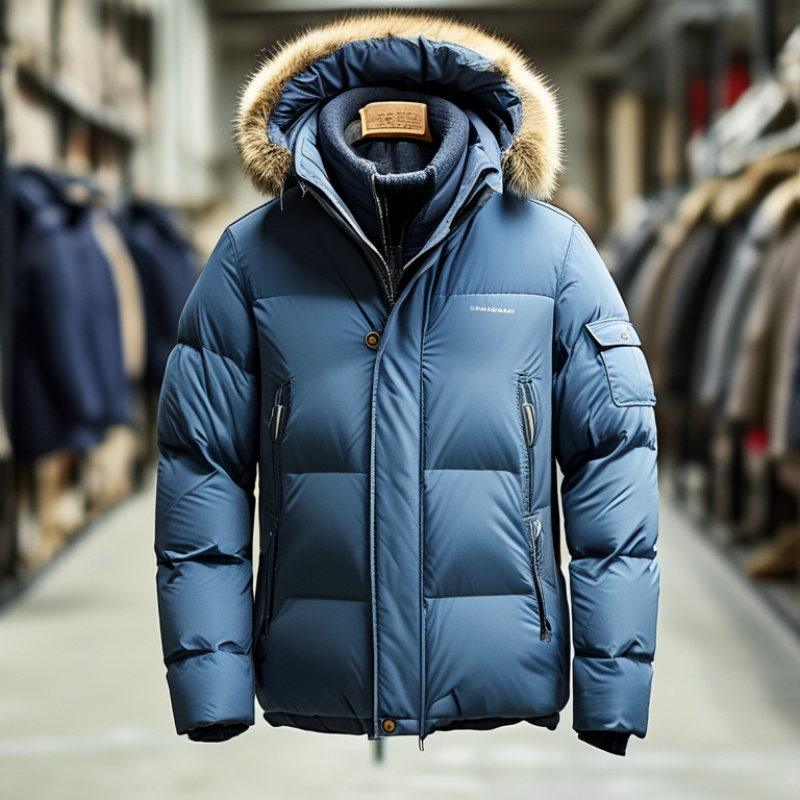
China Best Puffer Jacket Men Supplier for Global Buyers

Product Basics: 550–900 FP Down and Men’s Puffer Warmth

Men’s puffer warmth starts with fill power, not marketing language.

IDFL testing guidance defines fill power as the cubic inches occupied by one ounce of down. A 550 FP jacket can provide dependable warmth with heavier insulation. A 900 FP jacket can reach similar warmth with less weight. Higher is not automatically better.

For global buyers, request test records using consistent methods, such as ASTM D4523. Check down content, fill weight, stitching, and compression recovery. A 700 FP jacket with poor baffle design may feel colder than a well-built 600 FP jacket.

In product evaluations, I would inspect the collar, cuffs, zipper flap, and hem first. These areas often reveal practical warmth. Laboratory numbers matter, but factory consistency matters more.

Tips:

Ask for fill power, fill weight, and finished garment measurements together. Request inspection photos before bulk production. Textile Exchange’s Materials Market Report 2024 projects global fiber production may reach 160 million tonnes by 2030. That growth makes traceability and material documentation increasingly important.

I would also test one sample after repeated packing. It may not recover perfectly, and that weakness deserves honest discussion.


Material Standards: 80/20 Down–Feather Ratios and RDS Certification

For global buyers, an 80/20 down–feather ratio is a practical starting point for men’s puffer jackets. That ratio means the filling contains 80 percent down and 20 percent feathers by weight. However, the label alone cannot prove warmth. Experienced sourcing teams request batch-level test reports, not only factory claims. Reports should show composition, fill power, cleanliness, moisture, and odor results. Small differences can affect loft inside a jacket.

RDS certification adds a responsible sourcing checkpoint. It supports traceability and animal-welfare controls through the supply chain. Buyers should verify the certificate number, valid scope, and transaction records for each shipment. A reliable supplier can explain where the filling was processed and how production lots remain separated. We recommend comparing laboratory reports with random samples from finished jackets. Our inspection process is not flawless. Stitching, storage, and compression can still reduce loft. That limitation deserves honest discussion.

Tips: Ask for a 100-gram filling sample before bulk approval. Check whether the down regains volume after gentle shaking. Request close photos of labels, cartons, and test documents. Compare measurements across several jackets, not one sample. If the sample feels unusually flat, pause and investigate. A beautiful showroom piece may not represent the full production batch.

Supplier Selection: 650-FP Samples, MOQ, QC, and Factory Capability

China Best Puffer Jacket Men Supplier for Global Buyers

A reliable supplier should prove capability with physical samples, not polished photos. Request several men’s puffer jackets using 650-FP down before discussing large orders. Check loft, weight, warmth, stitching, zipper movement, and recovery after compression. One sample is not enough.

Ask for the fill-power test method and recent laboratory records. The 650-FP claim should match the actual down blend and batch documentation. Inspect shell fabric density, seam sealing, lining comfort, and wash performance. Small details matter. During factory evaluations, I also check whether workers record needle breaks, loose threads, and panel measurements. These records reveal daily discipline.

MOQ needs careful negotiation. A low MOQ may increase fabric waste or limit color choices. A high MOQ can trap cash when demand is uncertain. Request a written quotation covering sample fees, size grading, packaging, lead time, and replacement terms. QC should include incoming material checks, mid-production inspections, final measurement reviews, and random carton audits. Photos help, but independent inspection is more dependable.

Factory capability extends beyond sewing lines. Confirm down-cleaning access, quilting equipment, pattern development, sample-room staffing, and production capacity during peak months. Ask to see recent, comparable production records. A factory may promise fast delivery, yet its sample room can be overloaded. That is a warning. I would also leave room for correction; early specifications are rarely perfect, and a practical supplier should document changes instead of hiding them.

Testing and Compliance: ISO 11092, EN 12934, and REACH Requirements

A reliable China puffer jacket men supplier should treat testing as part of production, not a final paperwork task. ISO 11092 measures thermal resistance and water-vapour resistance under controlled laboratory conditions. These results help buyers compare insulation and breathability. They do not predict performance in every climate.

EN 12934 focuses on composition labelling for processed down and feathers. The stated percentages should match the tested filling, sewn label, and purchase specification. REACH requirements demand careful control of restricted substances and substances of very high concern. Chemical testing may cover fabric, dyes, coatings, trims, and filling materials. A single report is not enough. Batch records matter.

Tips: Request reports linked to the exact style, fabric, and filling batch. Check laboratory accreditation and test dates. Ask for traceability from incoming materials to packed jackets. Keep sealed samples for independent review. Small details expose weak systems. In practice, suppliers can miss zipper coatings or finishing chemicals during early checks. That is a useful warning, not a reason to hide the problem. A stronger process repeats risk-based testing when materials, factories, or production batches change.

Global Purchasing: HS Codes, Incoterms, Lead Times, and Landed Cost

For global buyers, sourcing men’s puffer jackets from China starts with product facts, not a quoted price. Confirm shell fabric, fill type, fill weight, lining, size range, and packing method. These details influence the correct HS classification and customs treatment. HS codes are internationally structured, but national tariff lines may differ. Ask the supplier for its proposed code, then verify it with a licensed customs broker. A code copied from an old shipment can create delays or unexpected duty.

Incoterms define responsibility, risk, and delivery costs. FOB may suit buyers with established freight contracts. FCA can be practical for container or multimodal shipments. CIF includes ocean freight and insurance to the named port, but destination charges still need checking. DDP appears simple, yet tax and import responsibilities require careful review in each market. Put the chosen term, named place, and version in the purchase contract. Vague wording causes expensive arguments.

Lead time should separate sampling, material preparation, production, inspection, and transit. A realistic plan includes buffer for fabric delays and rework. Calculate landed cost per jacket: unit price, export charges, freight, insurance, duty, broker fees, local delivery, and storage. Check every charge. Do not rely on a supplier’s “all-in” figure without a written breakdown. Estimates can be imperfect. I would recheck them against a small trial order and current freight rates. That extra check often reveals carton-volume errors or missing destination fees.

China Best Puffer Jacket Men Supplier for Global Buyers - Global Purchasing: HS Codes, Incoterms, Lead Times, and Landed Cost

Purchasing Dimension Typical Specification / Benchmark Buyer Application Commercial Notes
Primary HS Code HS 6201.40 — Men’s or boys’ overcoats, car-coats, capes, cloaks, anoraks, ski-jackets and similar articles, of man-made fibres Synthetic-fill puffer jackets and polyester-shell insulated outerwear Final classification depends on construction, fiber composition, garment type, and the importing country’s tariff schedule.
Alternative HS Classification HS 6201.30 may apply to certain men’s or boys’ outerwear of cotton; other textile compositions may fall under different subheadings. Cotton-shell or mixed-material jacket programs Confirm the 6-digit HS code and national tariff extension with a customs broker before shipment.
Common Shell Fabrics 100% polyester or nylon; typical weights range from approximately 30–75 g/m² depending on design and weather protection. Lightweight fashion jackets, commuter outerwear, and winter styles Request fabric composition, GSM, tear strength, colorfastness, and water-repellent test results.
Insulation Options Polyester fiberfill, recycled polyester fiberfill, or down/feather fill; fill weight and fill power should be specified separately. Different warmth levels, target retail prices, and animal-origin requirements For down products, request species composition, fill power, down-proof construction, and applicable certification documents.
Typical MOQ Approximately 300–1,000 pieces per style and color for standard production; lower quantities may be possible with a premium. Private-label, e-commerce, and seasonal purchasing programs MOQ is affected by fabric minimums, color-dyeing requirements, trims, printing, and size ratios.
Sample Lead Time 7–15 calendar days for a basic sample; 15–30 days for a new pattern, custom fabric, or complex trim package. Fit approval, fabric review, and pre-production confirmation Add courier transit time and allow additional time for sample revisions.
Bulk Production Lead Time Approximately 30–60 calendar days after approval of the pre-production sample, materials, and payment terms. Seasonal replenishment and planned international launches Peak-season capacity, fabric availability, inspection findings, and order changes can extend the schedule.
EXW Buyer collects the finished goods from the agreed premises and manages export clearance, freight, insurance, and import procedures. Experienced buyers with established logistics partners Lowest seller responsibility, but the buyer carries most logistics and export-clearance risks.
FOB Seller completes export formalities and delivers goods on board the nominated vessel at the agreed port; buyer arranges main carriage and import clearance. Full-container or consolidated ocean shipments Common for ocean purchasing; clarify the named port and responsibility for origin charges.
CIF Seller pays cost, marine freight, and minimum insurance to the named destination port; buyer handles import clearance, duties, taxes, and inland delivery. Buyers requesting a quoted ocean freight component CIF does not mean delivery to the buyer’s warehouse and does not include destination customs charges.
DAP Seller arranges transport to the named place; buyer normally handles import clearance, duties, and taxes. Warehouse delivery without transferring import-tax responsibility Specify the exact named place and confirm whether unloading is included.
DDP Seller arranges delivery and assumes responsibility for import clearance, duties, and taxes where legally and operationally permitted. Small-volume or simplified door-delivery purchasing Verify importer-of-record requirements, tax registration, customs compliance, and the exact items included in the quote.
Ocean Transit Benchmark China to major European ports: approximately 30–45 days port-to-port; China to North American West Coast: approximately 15–30 days port-to-port. Cost-focused seasonal orders Actual transit varies with port pair, sailing schedule, transshipment, congestion, and customs processing.
Air Freight Benchmark Approximately 3–10 days airport-to-airport, excluding export handling, customs clearance, and final delivery. Urgent replenishment and small commercial shipments Air freight is normally priced by the greater of actual weight or volumetric weight.
Indicative Packing Capacity Approximately 40–80 jackets per export carton, depending on size range, compression, carton dimensions, and packing method. Freight planning and carton-count estimation Confirm carton size, gross weight, net weight, and packed measurement before booking freight.
Illustrative Product Cost US$18–35 per piece for a standard synthetic-fill jacket at medium-volume production, excluding freight, duties, taxes, and special customization. Initial budget planning Actual pricing depends on fabric, fill, construction, trims, testing, order quantity, packaging, and payment terms.
Landed Cost Formula Landed cost = product price + origin charges + international freight + insurance + import duty + import tax + customs fees + destination delivery. Comparing supplier quotations on an equivalent basis Use the same currency, delivery point, quantity, HS classification, and tax treatment for every quotation.
Quality-Control Checkpoints Measurement tolerance, seam strength, zipper operation, fill distribution, colorfastness, needle detection, labeling, and carton condition. Reducing defect, return, and customs-compliance risk Use an approved inspection standard and define acceptable quality limits before bulk production.
Documents Commonly Required Commercial invoice, packing list, bill of lading or air waybill, certificate of origin where applicable, and product compliance documents requested by the destination market. Import entry, customs valuation, and product compliance Document requirements vary by destination, product composition, labeling rules, and trade agreement eligibility.

Planning note: Freight rates, duties, taxes, exchange rates, production schedules, and customs classifications are variable. Buyers should obtain a current freight quotation and confirm the applicable tariff treatment with a qualified customs professional before placing an order.