Leave Your Message

2026 Best Dresses for Wholesale Buyers

For wholesale buyers, the best dress range for 2026 will balance clear trend direction with dependable, repeatable sales. McKinsey and The Business of Fashion forecast low single-digit growth for the global fashion industry in 2025, a reminder that buyers may need sharper product choices, not simply more styles. Their State of Fashion report also points to ongoing pressure on costs and consumers’ value expectations. That matters on the showroom floor: a striking satin dress may attract attention, while an easy-care day dress can earn repeat orders.

The 2026 Best Dresses for Wholesale Buyers guide focuses on wearable silhouettes, fabric hand-feel, color stories, size coverage, and practical margin checks. Small details count. A lined bodice, secure zipper, and accurate color card can make the difference between a sample that looks good online and stock that works in store. For broader context, McKinsey senior partner Achim Berg has contributed to the firm’s long-running State of Fashion analysis. Its practical lesson for buyers, paraphrased rather than presented as a direct quote, is to plan for uncertainty and stay close to customers.

Use this guide to compare occasionwear, shirt dresses, knit styles, and everyday bestsellers before committing to volume. No forecast is perfect; trend calls can miss. The aim is a balanced assortment with enough freshness to inspire shoppers and enough commercial discipline to protect a buyer’s budget. Dress Dress Dresses should earn its place through fit, quality, and sell-through potential—not trend language alone.
2026 Best Dresses for Wholesale Buyers

How to Define the Best Wholesale Dresses for 2026

How to Define the Best Wholesale Dresses for 2026

The best wholesale dress is not simply the one with the lowest unit cost. It should balance sell-through potential, landed cost, dependable sizing, and realistic reorder options. McKinsey’s State of Fashion 2025 projected global fashion growth of 2–4% that year, a measured outlook rather than a boom. For 2026 buying plans, that supports careful testing: compare a small opening order with sales data before committing to deeper stock.

Check stitching at stress points, lining opacity under bright light, and whether a size run fits consistently across colors. Small defects become costly at scale.

Material and Fit Considerations

Material choices also deserve scrutiny. Textile Exchange’s Materials Market Report 2024 estimated global fiber production at 124 million tonnes in 2023, with polyester accounting for 57%. That figure describes the wider fiber market, not dress demand. Still, it makes fiber composition a useful sourcing question: ask for clear content information, fabric weight, and care instructions, then assess hand-feel and drape on a sample. A dress that photographs beautifully may cling, wrinkle, or feel heavy after hours of wear.

Fit matters. Review returns and customer comments by size, not just total sales. Even careful forecasts miss. I would leave room for a few imperfect bets, but set reorder thresholds before placing them.
Key Dress Categories and Their Wholesale Markets

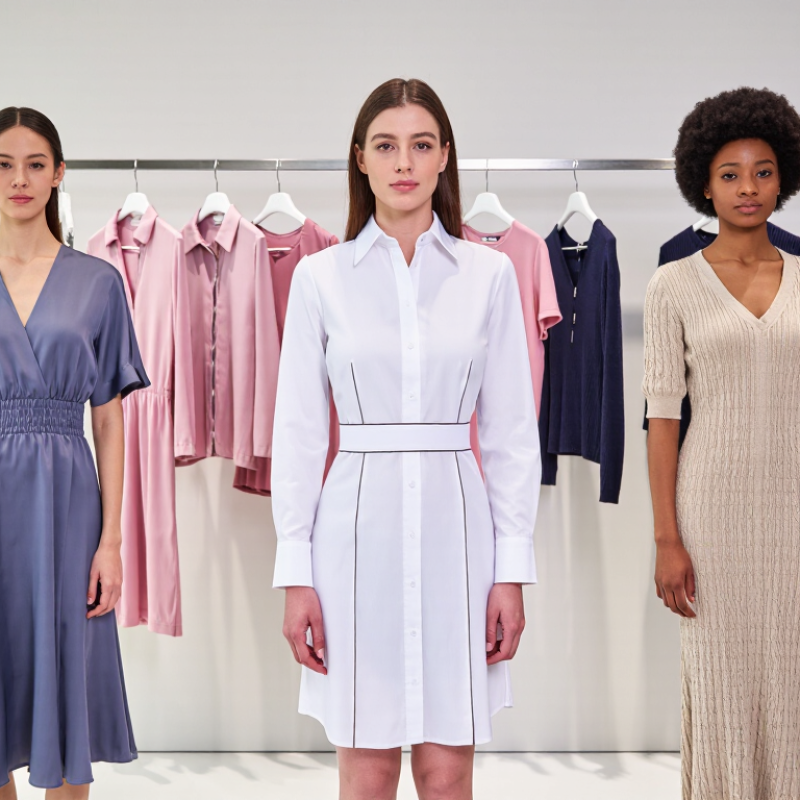
For wholesale buyers, everyday dresses often provide the steadiest starting point. Cotton poplin shirt dresses suit customers seeking easy care and a polished look. Rib-knit midi styles work well in cooler seasons and transitional climates. Keep colors practical: black, navy, and soft neutrals usually coordinate with existing stock. Add a few seasonal shades, but avoid ordering deep quantities before testing demand.

Occasion dresses serve a different market. Boutique shoppers and event-focused online customers may look for satin finishes, wrap shapes, or sleeves that photograph clearly. Fit matters. Check the waist placement, lining, and zipper on physical samples before confirming a larger order. A dress can look elegant on a hanger and still feel restrictive when seated. Small details count.

Workwear and modest styles can attract buyers serving office districts, family-focused communities, or customers who prefer more coverage. Shirt dresses with removable belts are flexible; longer sleeves and opaque fabrics can broaden their use. Review size measurements, fabric weight, and care instructions with suppliers. Ask for garment measurements, not just a size label. Wholesale forecasts are never perfect, and a trend report may miss local preferences. Start with a balanced size run, then reorder proven styles when lead times allow.

How to Assess Quality, Fit, and Supplier Reliability

For wholesale buyers, a dress should be checked beyond its first impression. Review a sample in daylight: uneven stitching, puckered seams, or a zipper that catches can signal production issues. Check the inside, too. Feel the lining and inspect seam finishes, then gently stretch the fabric to see whether it returns to shape. A white cloth rubbed against a dark sample may reveal loose dye. Small clues matter. Measure the garment against your own size chart, not just the supplier’s label. Request a size set when possible; one sample cannot show how grading works across sizes. I still find fit easy to misjudge from photos, especially around armholes and waist placement.

Supplier reliability shows up in clear specifications, realistic lead times, and consistent answers. Ask how fabric substitutions are handled and what tolerances apply to measurements. Request a pre-production sample that matches the intended fabric and construction. A quick reply is not proof. Compare written details with actual samples, and keep records of approvals and changes. If communication is vague, pause before committing to a large order. A small trial order can expose packing or consistency problems, though it adds time and cost. No checklist removes risk; some defects only appear after repeated wear or washing.

2026 Best Dresses for Wholesale Buyers - How to Assess Quality, Fit, and Supplier Reliability

Dress Type Common Fabric Options Quality Checks Fit and Wearability Checks Supplier Reliability Checks
Knit T-shirt Dress Cotton jersey, cotton-blend jersey, or viscose-blend knit. Fiber content and fabric weight vary by intended season and opacity. Check for even stitches, secure seams, consistent fabric hand, and recovery after stretching. Wash-test a sample for shrinkage, twisting, color change, and pilling. Check shoulder placement, chest ease, sleeve opening, and hem balance. Assess transparency and cling under normal lighting and movement. Request a pre-production sample, a written size spec, and confirmation that bulk fabric matches the approved sample. Verify production lead times and inspection procedures.
Woven Shirt Dress Cotton poplin, cotton-twill, linen, or cotton-blend woven fabric. Wrinkle behavior and drape depend on fiber, weave, and finishing. Inspect collar symmetry, button spacing, buttonholes, topstitching, and seam finishing. Check that the front placket lies flat and buttons are securely attached. Check that the garment allows movement across the back and shoulders. Confirm chest coverage when seated and standing, and review sleeve and dress length on the intended size range. Ask for the fabric composition, care instructions, graded measurements, and sample approval process in writing. Confirm how fabric substitutions or production delays are communicated.
Wrap Dress Woven viscose, crepe, polyester crepe, or jersey blends. Fabric weight and drape affect coverage and how securely the wrap stays in place. Check tie attachment points, seam strength, edge finishing, and the stability of the neckline. Test the closure through repeated movement and sitting. Test coverage across different bust measurements and body positions. Check for gaping, excess fabric, and a secure overlap; evaluate whether the tie can be adjusted comfortably. Request fit samples on more than one size where possible. Confirm that tie length, closure construction, and measurement tolerances are included in the approved specification.
Occasion or Evening Dress Satin, chiffon, crepe, lace, or lined woven fabrics. Fiber content, lining, embellishments, and care requirements should be confirmed for each style. Inspect lining coverage, zipper operation, seam neatness, embellishment security, and fabric snags. Check color consistency and the appearance of the garment under different lighting. Check bust support, neckline stability, sitting and walking comfort, and hem clearance with intended footwear. Assess whether the lining restricts movement or shows through. Obtain a finished sample and written details for trims, lining, and care labeling. Confirm how the supplier controls delicate materials and checks embellishments before packing.
Denim Dress Cotton denim or cotton denim with elastane. Stretch content, fabric weight, wash, and finishing affect comfort and appearance. Check seam strength, rivets or snaps where used, zipper function, and even topstitching. Wash-test for shrinkage, color transfer, and changes in hand feel. Check sitting and walking ease, armhole comfort, and movement through the hips. Confirm the intended fit after washing, especially for non-stretch denim. Request fabric and wash specifications, a sample from the intended production process, and documented measurement checks. Clarify responsibility for defects in hardware or finishing.
Rib-Knit Dress Cotton, viscose, or synthetic-fiber rib knits, sometimes blended with elastane. Rib structure and fiber blend influence stretch and recovery. Check rib alignment at seams, consistent stretch, recovery after wear, and seam comfort. Wash-test for growth, shrinkage, and surface pilling. Assess stretch over the bust, waist, and hips without excessive strain. Check opacity, hem stability, and whether the fabric retains its shape after movement. Ask for fabric composition, care instructions, and test results relevant to the product. Approve a sample after washing and confirm the supplier can reproduce the same stretch and recovery in bulk.

Buyer note: Fabric performance and fit vary by construction, finishing, and size range. Set measurable requirements in the tech pack, approve samples before bulk production, and use applicable textile testing standards or qualified laboratories when product claims or regulations require them.

Pricing, Minimum Orders, and Inventory Planning

For 2026 dress orders, compare more than the quoted unit price. Add freight, packaging, payment fees, and a realistic allowance for defects or returns. A dress listed at $18 may cost considerably more once it reaches your stockroom. Check whether prices change by fabric, size range, or order volume. Ask for a written quote with its validity period. Small details matter.

Minimum order quantities can hide inventory risk. Confirm whether the minimum applies per style, color, or total purchase. A 120-piece minimum across four colors sounds manageable, but size breakdowns can leave gaps. Request the size ratio before confirming. If possible, test a smaller run or inspect a sample first. It costs time. Still, a sample can reveal fabric weight, stitching, and fit issues that photos miss.

Plan stock by style and size, not just by total units. Use recent sales, planned promotions, and seasonal timing to estimate demand. Keep a modest reserve for proven sellers, while limiting depth in unfamiliar colors. Review reorder lead times and set a reorder point before popular sizes run low. Forecasts will be wrong sometimes. Mine would be, too. A simple spreadsheet tracking unit cost, minimums, lead time, and weekly sell-through makes the next buying decision less of a guess.

2026 Best Dresses for Wholesale Buyers — Pricing, Minimum Orders, and Inventory Planning

Illustrative example: estimated unit price by order quantity for a single dress style.

Planning note: The figures below are hypothetical planning assumptions, not verified market averages or supplier quotes. Use actual quotes and minimum order quantities when budgeting. Before placing a larger order, compare the per-unit savings with your sales forecast, available cash, and the risk of holding unsold inventory.

2026 Trends Shaping Wholesale Dress Selection

Wholesale dress selection in 2026 is less about chasing one loud look and more about building useful variety. Buyers are watching relaxed tailoring, fluid midis, and dresses that move from daytime appointments to evening events. A clean waist seam, adjustable straps, or discreet pockets can matter more than dramatic details. Fit sells.

Texture and color are shaping assortments, too. Look for soft crinkle finishes, lightweight sheer layers, and breathable fabrics that keep their shape after wear. Dusty blue, warm clay, and muted green offer fresh options beside familiar neutrals. Still, color forecasts are not guarantees. A beautiful swatch may look different under store lighting, so review samples in person when possible.

For wholesale orders, compare fabric hand, size grading, care requirements, and minimum quantities before committing. Test how a style sits across several sizes, not just on a single sample. Ask suppliers for clear fiber and care information, especially when sustainability claims influence your buying decisions. A trend board can make an untested dress look irresistible; sometimes that is where judgment slips. Small test orders can reveal what customers actually reach for.