










Why does the quality of the same fabric vary greatly?
Cotton is one of the most common textile raw materials in our daily life. However, as the textile industrialization scale is more and more large, industrial division of labor is more and more complex, general textile people can involve the industrial chain depth is very limited, some textile people even in this industry precipitation for many years, to their every mention "cotton" is not really understand, not understanding of cotton fabrics in the fabric material itself of the various quality problems behind the truth, so often face the customer question. For this reason, We will explain the problems affecting the quality of cotton fabrics according to raw materials and spinning.
raw material
1.Soil quality + climate: different natural quality
Choosing good raw materials is the basic premise of high-quality fabrics.
Cotton, like most cash crops, has its own special requirements for soil quality and climate. Soil moisture, nutrients, temperature, air, salt and alkali content, and texture all have a great influence on the growth of cotton. Despite the increasing demand for cotton in the global market, there are not many areas suitable for planting cotton. At present, there are three core cotton producing areas in the world, which are:
China
(Cotton area of Yangtze River Basin, Cotton area of Yellow River Basin and Cotton area of Xinjiang)
1、Xinjiang cotton area: Xinjiang cotton area mainly includes southern Xinjiang and northern Xinjiang. This area has abundant sunshine, dry climate and scarce rainfall is irrigated cotton; farming system is one ripe a year, concentrated cotton fields, planting scale, high mechanization degree; high yield, good raw cotton color and "three silk" content is lower than other cotton areas. The strength of cotton fiber in Xinjiang is lower than that in the Yellow River and Yangtze River basins, mainly due to the low moisture return rate.
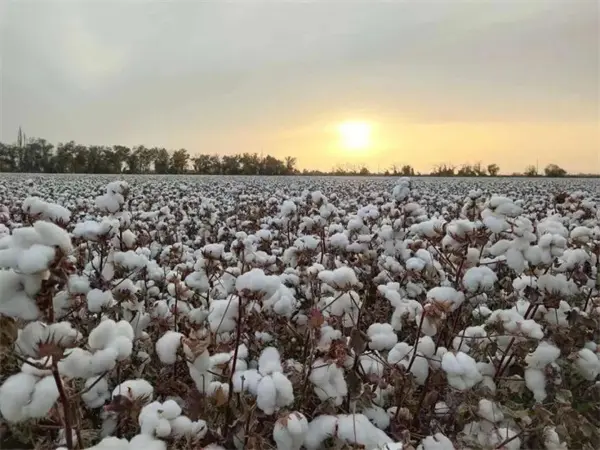
2.Cotton area of the Yellow River Basin: This area has sufficient sunshine, good heat conditions, medium soil fertility, moderate annual precipitation, and good fiber quality in normal years. However, due to the improper allocation of intercropping and interplanting in some areas, the different degree of diseases and pests, and the rainy and low temperature in some years, the annual fiber quality is unstable.
Shandong, Hebei cotton, good color, good luster, long fiber, low short velvet rate, good strength, a grade higher than Hubei, horse clone value is small, can spin 40 yarn, but more than three silk.
Henan in addition to Nanyang and Xinyang two places belong to the set of planting, the production period is short, cotton is low in strength, high fineness, color is not as good as Shandong, Hebei, serrated processing short velvet high, can also spin 40s.
3.Cotton area of the Yangtze River Basin: Hunan and Hubei provinces in this area have relatively large cotton production. Its cotton is characterized by good maturity, horse clone value is large, fiber is thick, more than 80% of the cotton horse clone value is more than 4, three silk less, short velvet rate is lower than Henan, color gray, can spin 21,32 yarn.
America
(Cotton belt, south of 35°N)
1, California SJVACALA cotton: is the SJV valley area of California "ACALA" planting varieties of cotton, the region climate conditions, high grade cotton proportion, cotton quality, the same grade with the most expensive, the average length above 1-1 / 8, not less than 30 GPT, fineness in 4.2, uniformity is higher than 82%, output 80% for more than three cotton.
2.SJVUPLAND: The non- "ACALA" cotton grown in SJV Canyon area, SJVUPLAND is SJV transgenic cotton, the quality is worse than SJVACALA, and the price is cheaper than other regions, but it also belongs to SJV cotton, which accounts for 10% of the total output of SJV.
3.C / A cotton: California / Arizona cotton, C / A cotton, cotton quality is ok, the price ranks third, the average length is higher than 1-3 / 32, strong 26-29 GPT, the length of 2003 has been improved, generally can reach 1-1 / 8.
4.Memphis cotton / Eastern cotton: Memphis / Eastern cotton, the price ranked fourth, the output accounted for 49% of the total production of the United States, the average length is higher than 1-1 / 16, the quality is general, and the central and southern production areas are partly for export.
5."MOT" cotton: mainly refers to the cotton produced in Texas / Kan Thai / Oklahoma. "MOT" cotton has the lowest price in the same grade, short length and thick fiber, and is suitable for airflow spinning.
6.Pima (PIMA) cotton: the long staple cotton of the United States, grown in Texas, Arizona, New Mexico, California and other states, almost all the long staple cotton is used for export, with an annual output of about 150,000 tons. The grade fiber length of 46 / 32 "and the grade fiber strength of 40 GPT can be used for circular spinning to produce cotton yarn with 60" yarn or higher.
India
(Cotton areas are mainly distributed in Punjab, Hayana, Latenstan, and some areas of the northwest Deccan Plateau)
India is the third largest cotton producer in the world, with the first cotton sown area in the world, but the yield per unit area has always been at the low level of 20 kg / mu, far below the global average of 41 kg / mu.
Indian cotton varieties are divided into three categories: staple fiber Indian staple cotton, medium long staple cotton and Egyptian cotton varieties. The main varieties include Deshi, J34, V797, LRA, MECH 1, Bunny, Shankar-6, MCU 5, DCH32, Susin, etc. The international market is more popular in Shankar-6
The advantages of Indian cotton are such that:
● Cotton price is 3-5 cents lower than mechanized cotton; good grade, only (J34);
● Variety can meet the requirements of different spinning;
● Less cotton knots, especially Shankar-6 in the global capital in the less knot cotton varieties, the young yarn has the characteristics of less nodes;
● Gloss and color is one of the best cottonin the world.
The disadvantage is:
● Processing technology is backward and cotton pollution is more;
● Some varieties of miscellaneous release of high school;
● Poor packaging, no marking, after long-distance transport will cause cotton pollution, cotton bag damage and other phenomena;
● Due to small scale diameter, different cotton varieties mixed together, quality consistency is poor;
● Compared with other cotton, the clonal value of Indian cotton is relatively low, reaching 4.5 at the beginning of the year, and the value of the cotton horse is rapidly dropped to 3.8 or even 3.0.
2.Green and environmental protection: health is the core of quality
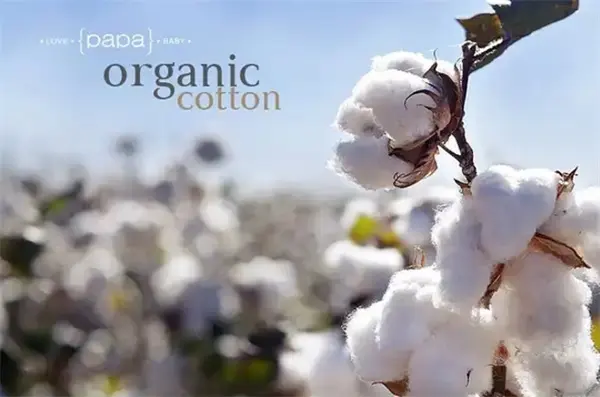
With human beings paying more and more attention to environmental protection issues, the attention to their own health problems also extends to cotton spinning products, in the international "organic cotton" has become the basic condition of high-end cotton spinning products.
Organic cotton is one of the important components of sustainable agriculture. Organic cotton is a kind of pure natural pollution-free cotton. In agricultural production, organic fertilizer, biological pest control and natural farming management prevent chemical products and pollution-free in textile production process; it has the characteristics of ecology, green and environmental protection. It is of great significance to ecological environmental protection, human healthy development and green natural ecological textile.
At the same time, organic cotton advocates the use of large-scale, mechanization, automated drip irrigation planting and other advanced technologies, to maximize the consumption of water resources, reduce the environmental pressure caused by human production activities, has become a global consensus.
Impact: Because the production of organic cotton is limited by cost, technology and management level, the current global production is still low, and most of the home textiles with the concept of "organic cotton" in the market are not entirely organic cotton. But with the deepening of the promotion, the share of organic cotton will be bigger and bigger.
- Picking + seed cotton processing: affecting the cleanliness and strength
Due to the different cotton picking methods, picking management precision and cotton processing quality, the difference in the strength of impurities, cotton knots and cotton fiber in cotton wool (primary cotton), which will directly affect the quality of the back yarn and then ultimately affect the quality of the fabric.
Impact: the same variety, the same area of cotton, because the management level is different, the quality of the lint will also have obvious differences. European and American countries have done well in scientific planting and processing, developing countries, including China, still need to improve, and need to implement scientific management of planting, mining and processing.
spin
1 Open and clear cotton (remove impurities): affect the cleanliness and strength
Open clear cotton is the first process of the spinning process, and the processing object is the broad cotton bag. It is to loosen the raw cotton, remove impurities, mix different components, and into rolls or pieces, used for the next process processing.
Impact: except for insufficient impurities, damaged fiber strength, will be irreversible to reduce the quality of the final yarn.
2 Comb cotton (mixed strip): affect cleanliness and uniformity
Comb cotton is the use of cover plate type or Laura type cotton combing machine, with the help of needle surface movement, the small cotton bundle into a single fiber state, further remove impurities and non-spun short fiber, make the fiber parallel straight, and finally make cotton plate into the tube.
Impact: Combing cotton technology can best reflect the management level and equipment quality of a cotton spinning enterprise. No matter how good the raw cotton is, if there is no good equipment, good people to operate, also can not finally spin a good yarn.
3 parallel (improved structure): affect the uniformity and weight of the strip
Fiber material before the process of loose, carding, has made a continuous strip semi-finished products, quality and structure from the requirements of the final yarn there is a big gap, fiber extension and separation are poor, directly used in the later process, will affect the quality of yarn, so they must first and merge multiple semi-finished products, stretch, mixed into a strip.
Impact: The quality of the cooked strips directly affects the drying and quality deviation of the strips of the final yarn, and ultimately affects the quality of the fabric. Controlling the quality of the merged strips is an important link to realize the quality of high-quality fabrics.
4 roving (stretch and twist): affect the strength and uniformity
Roth is to process the cooked strips generated by the previous process into different branches and different twist of the yarn yarn, for the use of the later yarn process.
Impact: The poor control of the roving process will lead to the easy to die in the next process, and ultimately can not be used for fabric weaving with high quality requirements.
5 Fine yarn-yarn forming: affect the accuracy and strength of yarn support
Gauge process is the last process of spinning production, it is the roving spinning into a certain number, in line with quality standards or customer requirements, for twisting, knitting or knitting use.
Impact: It is a very important process for spinning. The output of cotton spinning mill is the basis of the quantity of the consumption of production quality, raw materials, electric quantity, labor productivity and equipment integrity rate reflect the production technology and management level of the spinning mill.
6 drum (drum removal): affect cleanliness and extensibility
winding cylinder (also known as winding yarn) is the first process of preparation before weaving, its task is to process the pipe yarn or yarn from the spinning part on the winding machine into a tube meeting certain requirements.
Impact: The poor quality of the winding cylinder will directly affect the quality of the latter process.
7 Twist (increased increase): affect strength and uniformity
The purpose of protofilament twisting is to increase its tightness, and the purpose of adding tightness, but also to change the coil orm and line density, to meet the post-processing and use requirements.
Impact: Uneven twist yarn, insufficient or excessive tightness will directly lead to quality problems in the weaving process.