






How to distinguish between natural leather and artificial leather?
1. Visual identification method
Natural leather The front side is smooth and even, with pores and patterns, and the distribution is uneven. The back side of the leather has obviousAnimal fiber bundle, appearing fluffy and evenly distributed. The cut surface of natural leather shows consistent coloration, with a clear and fine texture on the side view, allowing for a distinct view of the underlying animal fibers. When wiped with fingernails, the leather fibers stand up, giving a velvety feel, and small amounts of fibers may also fall off.
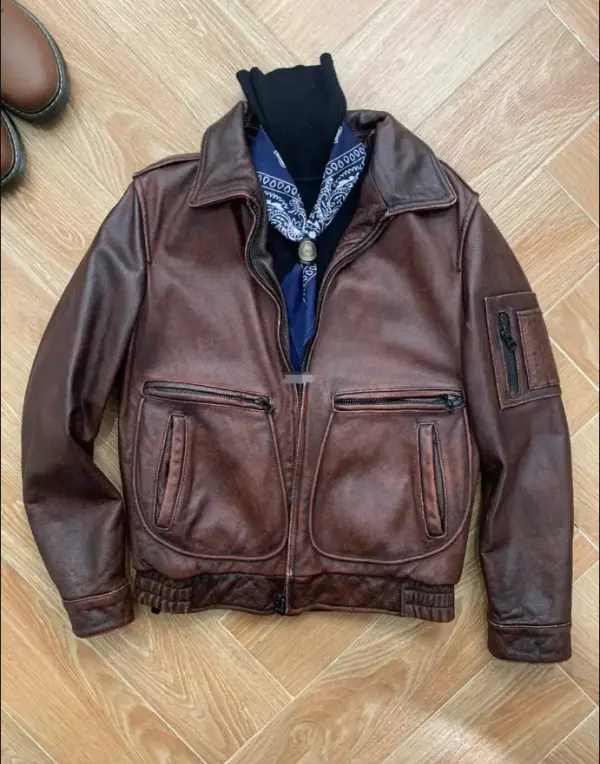
imitation leatherThe general epidermis is pore-free, while micro-pore leather artificial leather will have pores and patterns, but these pores and patterns are not obvious or show signs of more regular artificial carving. The reverse side of the artificial leather can reveal the fabric, and the side cutout shows no animal fibers, revealing the fabric fibers and resin at the bottom, or the lining cloth can be seen through the cutoutresinoid bondTwo levels. The gloss of artificial leather is brighter than that of natural leather, and the color is generally bright.
2. Touch identification method
Natural leather feels soft and has good elasticity, with a certain warmth to it. It is composed of naturally uneven fiber tissues, so the formed creases are also noticeably uneven. When the leather is bent with its right side down at about 90°, natural wrinkles will appear. Bending different parts of the leather produces creases of varying thickness and number, showing significant unevenness.
Artificial leather is soft, has no warmth, feels like plastic, bends down with similar thickness of creases, clear and uniform patterns and poor recovery.
3. Odor identification method
Natural leather has a strong smell of fur, even some processed products have a more obvious smell. Artificial leather products have a plastic smell, without the special smell of fur emitted by natural leather.
4. Combustion identification method
When natural leather burns, it emits a smell of burning and scorched hair. The ashes are usually easy to break into powder.
Artificial leather burns with a vigorous flame, contracts quickly and has a smell of plastic that is hard to smell, becomes sticky after burning and hardens into lumps when cooled.
5. Water absorption identification method
Natural leather has good water absorption on the surface, while artificial leather is the opposite, with good water resistance.
Notice the leather itself:
- Leather Surface: Natural leather has its own unique natural patterns, with a natural luster; artificial leather has a surface that resembles natural leather but lacks the natural patterns, appears brighter than natural leather, and is often brightly colored.
- Leather Body: Natural leather feels soft and resilient to the touch, while imitation leather products, although also soft, lack sufficient resilience and can become stiff in cold weather. When bent by hand, natural leather bends naturally with good elasticity, whereas imitation leather products bend stiffly with poor elasticity.
- Cut Surface: The cut surface of natural leather has consistent coloration and clearly visible fine fibers. In contrast, imitation leather products lack the natural fiber texture, or show fibers and resin at the bottom, or reveal two layers of fabric bonded with resin glue through the cut surface.
- Leather Interior: The front side of natural leather is smooth and flat with pores and patterns. The back side of the leather shows distinct lines
fasciculusIt is fluffy and uniform. In imitation leather products, some synthetic leather is consistent on both sides, and the inside and outside are glossy and smooth.