







How to clean a leather jacket
How to clean a leather jacket
Introduction
Leather jackets, as a classic and versatile clothing item, can showcase a unique style for both daily commutes and outdoor activities. However, many people face the challenge of "how to clean a leather jacket"—improper cleaning can not only damage the leather and destroy its luster, but may also shorten the lifespan of the jacket. Different types of leather jackets (such as genuine leather, synthetic leather, and suede) require significantly different cleaning methods. Blindly washing with water or using chemical cleaners can easily lead to the leather hardening, cracking, and fading. Dongguan Siyinghong Garment, a professional team deeply rooted in the field of garment care, combines years of experience in leather jacket production and maintenance to systematically outline the core methods and techniques for cleaning leather jackets. Next, we will comprehensively answer the question "how to clean a leather jacket" from aspects such as material-specific cleaning, daily care, stain treatment, avoiding common mistakes, and choosing professional services, ensuring your leather jacket always stays in good condition.
Proper cleaning methods for leather jackets of different materials (genuine leather, synthetic leather, suede)
The key to answering "how to clean a leather jacket" is to understand the material of the jacket. Different materials have different leather properties, and the cleaning methods must be precisely adapted to avoid damage caused by using a general method.
Cleaning methods for genuine leather jackets (cowhide, sheepskin, pigskin)
Genuine leather jackets are soft and breathable, but the leather is delicate and requires gentle cleaning.
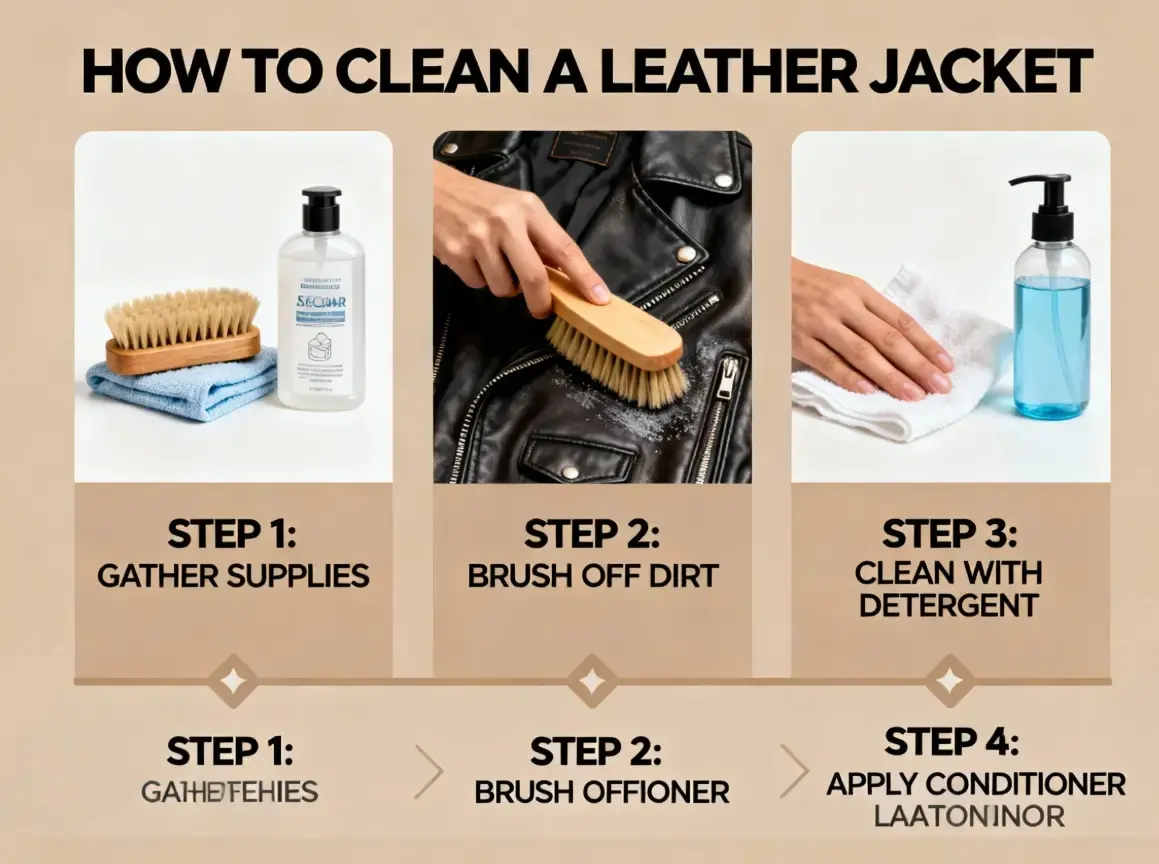
- Prepare the following tools: a soft-bristled brush (or a clean soft cloth), a leather cleaner (avoid those containing alcohol or acetone), a slightly damp towel, a dry towel, and leather conditioner.
- Cleaning steps: First, gently brush away surface dust with a soft-bristled brush (brush along the leather grain to avoid scratching); pour leather cleaner onto a soft cloth and gently wipe the surface of the jacket (focus on cleaning easily soiled areas such as the collar and cuffs), do not pour it directly onto the leather; wipe away any remaining cleaner with a slightly damp towel, then use a dry towel to absorb the moisture; hang it in a well-ventilated, shady place to air dry naturally (avoid direct sunlight or proximity to heat sources), and after it is completely dry, apply leather conditioner and wipe it evenly with a soft cloth to restore the leather's shine.
Cleaning methods for synthetic leather (PU, PVC) jackets
Synthetic leather jackets offer good value for money and are easy to care for, but they are less water-resistant and abrasion-resistant.
- Prepare the following tools: warm water (below 30℃), neutral laundry detergent (such as baby laundry detergent), soft cloth, dry towel, and special care product for artificial leather.
- Cleaning steps: Dissolve neutral laundry detergent in warm water and stir well; use a soft cloth to apply the diluted detergent and gently wipe the surface of the jacket. Stubborn stains can be wiped repeatedly (avoid vigorous rubbing to prevent the leather from wrinkling and peeling); wipe away any remaining foam with a clean, damp towel, and then dry with a dry towel; hang in a ventilated place to air dry naturally. After drying, apply a synthetic leather conditioner to extend its lifespan.
Cleaning methods for suede/nubuck leather jackets
Suede jackets have a unique texture, but they easily attract dust and are difficult to clean, requiring special tools.
- Tools needed: a suede brush (double-ended, with coarse bristles on one end and fine bristles on the other), suede cleaner, eraser cleaning block, and waterproof spray.
- Cleaning steps: First, gently brush away surface dust with a coarse brush and comb in the direction of hair growth; for stubborn stains, gently rub with an eraser (such as oil stains or dirt marks), or apply a small amount of abrasive cleaner to a soft cloth; after cleaning, comb the hair with a fine brush to restore its smoothness; hang it in a ventilated place to air dry naturally, and spray with waterproof spray after it is completely dry to enhance its stain resistance.
Daily cleaning and stain treatment tips for leather jackets
Regular cleaning is key to extending the life of a leather jacket, and proper emergency treatment can prevent stains from penetrating when faced with sudden stains (such as oil stains or beverage stains), which is also an important part of "how to clean a leather jacket".
Daily cleaning frequency and methods
- Frequency: Frequent cleaning is not necessary. Cleaning once a month is generally sufficient. After daily wear, gently wipe the surface with a soft cloth to remove dust and keep it clean.
- For detailed cleaning: Areas that are prone to getting dirty, such as collars, cuffs, and pocket edges, can be wiped weekly with a soft cloth dampened with a small amount of specialized cleaner to prevent stains from accumulating.
- Cleaning before storage: Before long-term storage, a thorough cleaning is necessary to ensure that there are no stains or moisture, otherwise mold may easily grow.
Emergency treatment of common stains
- Oil stains: Immediately absorb the surface grease with a dry towel (do not rub to avoid spreading), sprinkle a small amount of cornstarch or talcum powder on the stain, let it sit for 2-4 hours to absorb the residual grease, then gently brush off the powder, and then clean with a special cleaner.
- For beverage stains (coffee, juice): Use a clean towel dampened with water to gently press the stain (press from the outside in to the center to avoid spreading the stain), absorb the moisture, then gently wipe with a detergent of the appropriate type and let it air dry.
- Ink stains: For genuine leather jackets, immediately apply a small amount of alcohol (only for small areas) to a cotton swab and gently dab, then clean with a cleaning agent; for synthetic leather jackets, gently rub with an eraser and then wipe clean with warm water.
- Rainwater stains: After getting wet, immediately use a dry towel to absorb the moisture, and hang it in a well-ventilated, shady place to air dry naturally. Do not tumble dry or expose to direct sunlight. Apply a conditioner as soon as it dries.
Key points for maintenance and care of leather jackets after cleaning
Proper care after cleaning is essential to maintaining the good texture of a leather jacket; it's an indispensable follow-up step in "how to clean a leather jacket." Improper care can lead to dryness and cracking of the leather, affecting its appearance and lifespan.
Key points of drying process
- Air dry: Regardless of the material, after cleaning, hang it in a well-ventilated and shady place to air dry naturally, avoiding direct sunlight (which can cause the leather to age and fade), and keeping it away from heat sources such as heaters and air conditioner vents (which will cause the leather to dry and harden).
- Hanging method: Use a wide-shouldered hanger to hang the jacket, avoiding thin hangers (which can cause shoulder deformation). You can stuff a clean towel inside the jacket to keep it in shape.
- Drying time: Genuine leather jackets take about 12-24 hours to dry, while artificial leather jackets take about 6-12 hours. Ensure the jackets are completely dry before proceeding with any further care or storage.
Daily maintenance tips
- Regular oiling/care: Apply a special maintenance oil to genuine leather jackets every 2-3 months to keep the leather soft and shiny; apply a conditioner to synthetic leather jackets monthly to prevent cracking and peeling; brush suede jackets regularly to maintain their texture.
- Avoid contact with harmful substances: Keep away from chemicals such as alcohol, perfume, and hairspray, and avoid spraying them directly onto the leather jacket, as this will corrode the leather and cause fading.
- Storage tips: When not wearing it for a long time, hang it in a dry and well-ventilated wardrobe and put mothballs in it (wrapped in a breathable cloth bag to avoid direct contact with the leather) to prevent insects and moths; do not fold it for storage to avoid wrinkles.
- Waterproof and stain-resistant: After cleaning a new leather jacket, spray it with a waterproof and stain-resistant spray appropriate for the material to enhance its stain resistance and reduce the frequency of cleaning.
Common Mistakes and Avoidance Guide for Cleaning Leather Jackets
Many people damage their leather jackets due to improper cleaning methods. Understanding common mistakes can effectively avoid these risks, which is also a key point in "how to clean a leather jacket".
Myth 1: Washed leather jackets (especially genuine leather)
- Harmful effects: Washing genuine leather jackets can cause the leather to shrink, harden, crack, and lose its elasticity; washing synthetic leather jackets may cause them to come apart and wrinkle.
- Avoid these pitfalls: Except for synthetic leather jackets that are clearly labeled as washable, all other leather jackets should be dry cleaned or spot cleaned. Do not wash the entire jacket.
Myth 2: Using harsh cleaning agents (such as soap, laundry detergent, alcohol)
- Harmful effects: Soap and laundry detergent contain alkaline components that can damage the protective oil layer of leather, leading to dryness and cracking; alcohol can corrode leather, causing fading and hardening.
- Avoid these pitfalls: Choose specialized cleaning agents for the corresponding materials, such as genuine leather cleaners or neutral cleaners for synthetic leather, and avoid using general cleaning products.
Myth 3: Exposing to the sun or drying in an oven
- Harmful effects: Direct sunlight will accelerate the aging, fading, and brittleness of leather; drying will cause the leather to lose moisture quickly, leading to cracking and deformation.
- Avoid pitfalls: After cleaning, be sure to let it air dry naturally and place it in a well-ventilated, cool place, away from heat sources and strong light.
Myth 4: Store or apply conditioner immediately after cleaning.
- Dangers: Storing a leather jacket when it is not completely dry can easily lead to mold growth; applying conditioning agents while it is not dry will prevent the agents from being absorbed, making the leather sticky.
- Avoid these pitfalls: Ensure your leather jacket is completely dry before handling or storing it.
Myth 5: Scrubbing stubborn stains vigorously
- Harm: Vigorous rubbing can damage the surface of the leather, causing peeling and fading, especially for genuine leather and suede.
- Avoid these pitfalls: Stubborn stains should be spot-applied with a special cleaner and gently wiped, or you can seek professional cleaning services. Do not rub or scrub vigorously.
Recommendations for choosing a professional leather jacket cleaning and repair service
For valuable genuine leather jackets, those with large areas of stubborn stains, or those that have been damaged (such as cracks, fading, or glue failure), self-cleaning carries a high risk. Choosing a professional service is a safer approach and serves as a supplementary solution to the "how to clean leather jacket" guide.
How to choose a reliable professional cleaning service
- Check qualifications: Choose shops with leather cleaning and maintenance qualifications and a long operating history, and avoid small dry cleaners (which may use general dry cleaning solvents that can damage the leather).
- Understand the cleaning methods: Ask if a special cleaning process for leather jackets is used, and whether cleaning is done according to material classification to avoid a "one-size-fits-all" cleaning method.
- Check case studies and reputation: Learn about the store's reputation through online reviews and friend recommendations, and check past cleaning and repair cases to confirm its professional capabilities.
- Clear service guarantees: Confirm the scope of services, effect promises, and damage compensation policies with the store before cleaning to avoid subsequent disputes.
Suitable for professional cleaning
- Expensive genuine leather jackets (such as sheepskin and crocodile skin): The material is delicate and can be easily damaged by self-cleaning. Professional cleaning is safer.
- Large-area stains (such as oil stains or dye stains all over the body): difficult to remove completely by self-cleaning, and easy to spread the stain.
- Leather damage repair (such as cracking, glue separation, fading, scratches): Professional shops can provide repair services to restore the condition of leather jackets.
- Long-term uncleaning or mold growth: Professional disinfection, cleaning and repair are required to avoid mold residue damaging the leather.
Conclusion
Through the above content, you should now have a comprehensive and clear understanding of "how to clean a leather jacket." Whether it's targeted cleaning methods for different materials, emergency treatment of everyday stains, or post-cleaning maintenance tips and avoiding common mistakes, the core principles are "suitable material, gentle cleaning, and scientific care." Minor stains and daily cleaning can be done at home, following the principles of "no washing, no sun exposure, and no use of harsh cleaning agents." For valuable leather jackets or complex situations, we recommend choosing a professional cleaning and repair service. Dongguan Siyinghong Garment reminds you that cleaning and maintaining a leather jacket is a long-term process; the correct methods will ensure your leather jacket maintains its good texture and lasts longer.
FAQ
FAQ 1: Can a genuine leather jacket be dry cleaned?
Yes, you can, but you should choose a shop that offers "dedicated dry cleaning for leather goods" and inform the staff about the material of your leather jacket (such as cowhide or sheepskin) to avoid using ordinary dry cleaning solvents (which can damage the leather). Frequent dry cleaning is not recommended; once or twice a year is generally sufficient.
FAQ 2: What should I do if my synthetic leather jacket gets washed by accident?
Immediately absorb the moisture with a dry towel and hang it in a well-ventilated, shady place to air dry naturally. Do not expose it to direct sunlight or tumble dry. Once completely dry, apply a special leather conditioner and wipe it repeatedly to alleviate hardening and wrinkling of the leather. If glue separation or cracking occurs, it should be taken to a professional repair shop as soon as possible.
FAQ 3: What to do if stains on a suede jacket can't be removed?
For stubborn stains, first spray the stain with a special cleaning foam for suede, let it sit for 5 minutes, then gently scrub with a special brush, then dry with a towel and let it air dry. If the stain still cannot be removed, it is recommended to send it to a professional suede cleaning shop to avoid using strong cleaning agents yourself.
FAQ 4: What should I do if my leather jacket loses its shine after cleaning?
For genuine leather jackets, apply a suitable amount of genuine leather conditioner, wipe evenly clockwise with a soft cloth, let it sit for 1 hour, and then polish with a clean soft cloth to restore the shine; for synthetic leather jackets, apply a special care agent and wipe repeatedly until the shine is restored; for suede jackets, gently comb the fur with a fine brush and spray a small amount of conditioning spray.