






How Chest Width Is Measured on Jacket: Step-by-Step Guide for Accuracy
Introduction
Understanding how chest width is measured on a jacket is essential for anyone shopping for outerwear—whether online or in-store. A properly measured chest width ensures a comfortable fit, prevents ill-fitting jackets that are too tight (restricting movement) or too loose (looking shapeless), and saves time on returns or exchanges. But many people struggle with this measurement, unsure of where to place the tape, how tight to pull it, or whether to measure a jacket flat or on the body. In this comprehensive guide, we’ll answer “how chest width is measured on a jacket” by breaking down the tools needed, step-by-step instructions for flat and on-body measurements, tips for different jacket styles (slim-fit, regular-fit, oversized), common mistakes to avoid, and how to use this measurement to find your perfect size. Whether you’re a fashion shopper, a clothing brand owner, or someone looking to alter a jacket, this guide will help you master accurate chest width measurement.
What Is Jacket Chest Width?
Before diving into “how chest width is measured on a jacket,” it’s important to define what chest width refers to. Jacket chest width is the horizontal distance across the widest part of the jacket’s chest area—typically measured from the armpit seam (armscye) on one side to the armpit seam on the opposite side. This measurement is critical because it directly relates to how the jacket will fit around your torso: too narrow, and the jacket will feel constricting; too wide, and it will lack structure. Unlike body chest measurement (which is taken around your chest), jacket chest width is a flat measurement (for most sizing charts) that accounts for the jacket’s fabric, lining, and intended fit (e.g., slim-fit jackets have a narrower chest width relative to regular-fit styles).
Tools Needed to Measure Jacket Chest Width
To accurately measure chest width on a jacket, you’ll need just a few basic tools—no special equipment required:
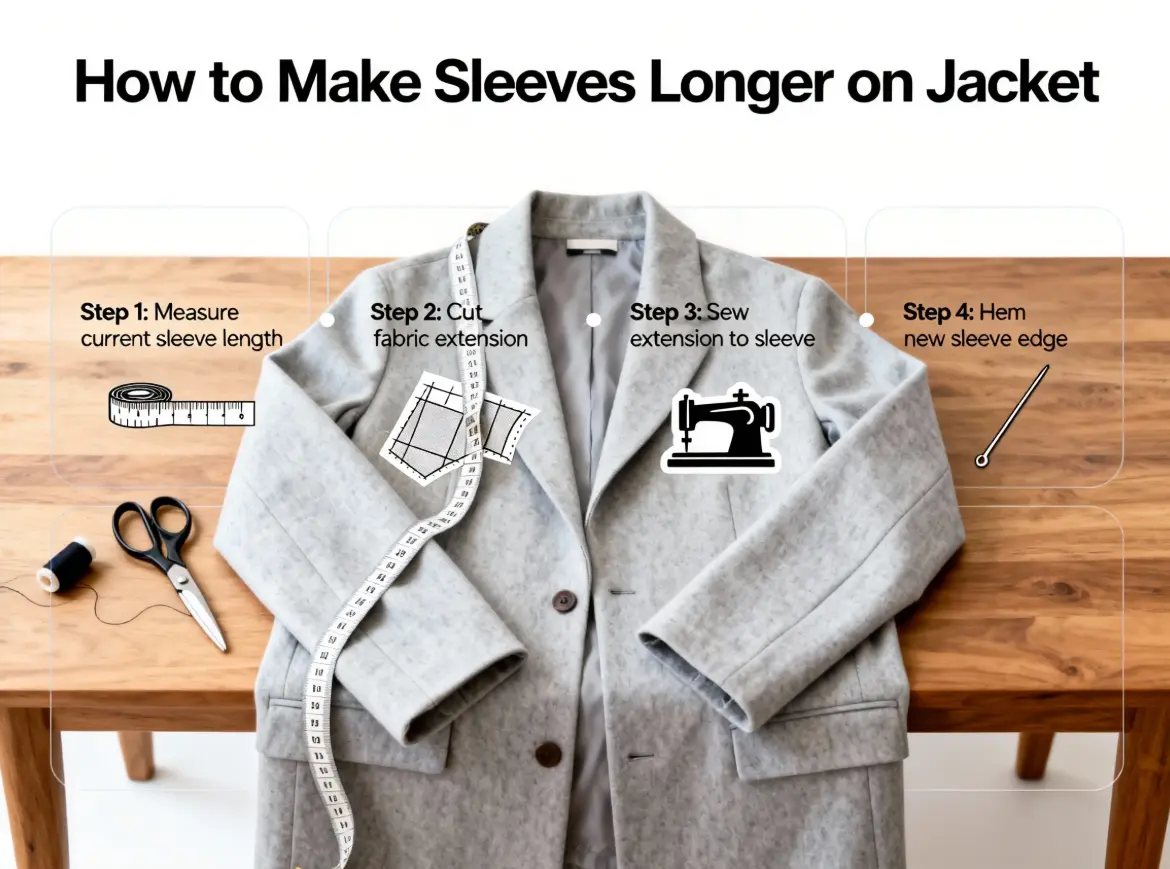
- Soft Measuring Tape: A flexible, fabric measuring tape (not a rigid ruler) is essential for wrapping around curves and laying flat on the jacket. Avoid using a metal tape measure, as it can damage delicate fabrics and won’t lay smoothly.
- Flat Surface: A clean, flat table, bed, or floor to lay the jacket on (for flat measurements). Ensure the surface is free of wrinkles or obstacles that could skew the measurement.
- Pen & Paper or Phone: To record the measurement (in inches or centimeters, depending on your region’s sizing standard).
- Optional: Helper: If measuring the jacket on your body, a helper can ensure the tape is level and accurate (though it’s possible to do it alone with a mirror).
Step-by-Step Guide: How Chest Width Is Measured on a Jacket
There are two primary methods for measuring jacket chest width: flat measurement (laying the jacket on a surface) and on-body measurement (wearing the jacket). Flat measurement is the most common method used by brands for sizing charts, while on-body measurement helps you confirm fit after purchasing.
Method 1: Flat Measurement (Most Accurate for Sizing Charts)
This is the standard method for answering “how chest width is measured on a jacket” and is used by clothing Manufacturers to determine size labels. Follow these steps:
- Prepare the Jacket: Lay the jacket flat on a clean, smooth surface. Zip or button it completely to ensure the front panels are aligned and the jacket is not stretched or bunched. If the jacket has a hood, collar, or any bulky details, flatten them gently without pulling the fabric.
- Locate the Armpit Seams: Find the armscye (armpit) seams on both sides of the jacket—this is where the sleeve attaches to the body of the jacket. These seams mark the widest part of the jacket’s chest.
- Position the Measuring Tape: Place the start of the measuring tape at the center of the armpit seam on one side of the jacket. Ensure the tape is flat against the fabric, not twisted, and runs parallel to the ground (horizontal).
- Measure Across the Chest: Extend the measuring tape straight across the front of the jacket to the center of the armpit seam on the opposite side. Keep the tape taut but not tight—you should be able to slide a finger under the tape to ensure it’s not compressing the fabric (which would give an inaccurate, narrow measurement).
- Record the Measurement: Note the number in inches or centimeters. This is the jacket’s flat chest width. For reference, many brands double this measurement to get the “chest circumference” (e.g., a flat chest width of 20 inches = a 40-inch chest circumference).
Method 2: On-Body Measurement (For Fit Confirmation)
If you already have the jacket and want to check if the chest width fits, use this method:
- Wear the Jacket: Put on the jacket and zip/button it completely. Wear a thin layer underneath (e.g., a tee or dress shirt) that you would typically wear with the jacket—this accounts for extra space needed for layering.
- Locate the Widest Part of Your Chest: Stand straight with your arms relaxed at your sides. The widest part of your chest is usually across your nipples or just below your armpits (aligning with the jacket’s armpit seams).
- Position the Measuring Tape: Have a helper wrap the soft measuring tape around your chest, aligning it with the jacket’s armpit seams on both sides. Ensure the tape is level (not slanting up or down) and snug but not tight—you should be able to fit two fingers between the tape and your chest for comfort.
- Compare to the Jacket’s Flat Measurement: The on-body measurement should be slightly larger than the jacket’s flat chest width (to allow for movement and layering). For example, if the jacket’s flat chest width is 20 inches (40-inch circumference), your on-body measurement should be around 38–42 inches (depending on desired fit: slim-fit = closer to 38 inches, regular-fit = 40 inches, loose-fit = 42 inches).
Key Considerations for Different Jacket Styles
How chest width is measured on a jacket can vary slightly based on the jacket’s style and intended fit. Here’s how to adjust your approach for common styles:
Slim-Fit Jackets
- Flat Measurement: Slim-fit jackets have a narrower chest width relative to regular-fit styles. When measuring, ensure the jacket is zipped tightly (without stretching) to get the true narrow fit. The flat chest width will be 1–2 inches narrower than a regular-fit jacket of the same size.
- On-Body Fit: A slim-fit jacket should hug your chest without restricting movement—your on-body measurement should be 1–2 inches larger than the jacket’s flat chest width (e.g., 20-inch flat width = 40-inch circumference, on-body measurement = 39–40 inches).
Regular-Fit Jackets
- Flat Measurement: Regular-fit jackets have a balanced chest width that allows for comfortable layering. The flat chest width is typically true to size, with no extra narrowing or widening.
- On-Body Fit: Your on-body measurement should match the jacket’s circumference (flat width × 2) or be 1 inch larger for ease of movement (e.g., 20-inch flat width = 40-inch circumference, on-body measurement = 40–41 inches).
Oversized Jackets
- Flat Measurement: Oversized jackets have a significantly wider chest width—often 2–4 inches wider than regular-fit styles of the same size. When measuring, lay the jacket flat without stretching it, as oversized styles rely on extra fabric for their loose silhouette.
- On-Body Fit: The on-body measurement can be 3–5 inches larger than the jacket’s circumference (e.g., 22-inch flat width = 44-inch circumference, on-body measurement = 45–48 inches) for that relaxed, oversized look.
Leather & Structured Jackets
- Flat Measurement: Structured jackets (like leather bombers or blazers) have stiffer fabric that holds its shape. Lay the jacket flat and smooth out any wrinkles—do not pull the fabric, as structured jackets won’t stretch much with wear.
- On-Body Fit: These jackets require a more precise chest width measurement, as they don’t have much give. Your on-body measurement should be no more than 1 inch larger than the jacket’s circumference to avoid a boxy fit.
Lightweight & Stretch Jackets
- Flat Measurement: Jackets made with stretch fabric (e.g., cotton-spandex blends) can be measured slightly relaxed, as the fabric will stretch with wear. The flat chest width may be slightly narrower, but the stretch will accommodate a range of body sizes.
- On-Body Fit: Your on-body measurement can be 2–3 inches larger than the jacket’s flat circumference, as the stretch fabric will adapt to your chest size.
Common Mistakes to Avoid When Measuring Jacket Chest Width
To ensure accuracy when answering “how chest width is measured on a jacket,” avoid these common errors:
Mistake 1: Measuring a Stretched or Bunched Jacket
- Problem: If the jacket is pulled tight, bunched, or not zipped closed, the flat measurement will be inaccurate (too narrow or too wide).
- Solution: Always lay the jacket flat, zip/button it completely, and smooth out all wrinkles before measuring.
Mistake 2: Pulling the Measuring Tape Too Tight
- Problem: Pulling the tape tightly against the jacket (for flat measurement) or your body (for on-body measurement) will result in a measurement that’s too small, leading to a tight-fitting jacket.
- Solution: Keep the tape taut but not tight—you should be able to slide a finger under the tape for flat measurements, or two fingers for on-body measurements.
Mistake 3: Measuring at the Wrong Location
- Problem: Measuring above or below the armpit seams (e.g., at the collar or waist) will not capture the true chest width, as the chest is widest at the armpits.
- Solution: Always measure from the center of one armpit seam to the center of the opposite armpit seam—this is the standard for chest width.
Mistake 4: Using a Rigid Ruler
- Problem: A rigid ruler can’t lay flat on the jacket’s curves, leading to uneven measurements and inaccuracies.
- Solution: Use a soft, flexible measuring tape designed for fabric—they’re affordable and widely available at craft stores or online.
Mistake 5: Ignoring Layering Space
- Problem: Measuring the jacket flat without accounting for layers (e.g., sweaters, hoodies) can result in a jacket that’s too tight when layered.
- Solution: When measuring on-body, wear the layers you plan to pair with the jacket, or add 1–2 inches to your body chest measurement when comparing to the jacket’s flat width.
How to Use Chest Width Measurement to Find Your Perfect Size
Once you know how chest width is measured on a jacket, you can use this measurement to shop confidently—whether online or in-store:
- Know Your Body Chest Circumference: Measure your chest (on-body, with a thin layer) and note the circumference (e.g., 40 inches).
- Check the Brand’s Sizing Chart: Most brands list flat chest width (or chest circumference) on their sizing charts. For example, a size “M” might have a flat chest width of 20 inches (40-inch circumference).
- Adjust for Desired Fit:
- Slim-fit: Choose a jacket with a circumference 1–2 inches smaller than your body measurement (e.g., 40-inch body = 38–39-inch jacket circumference).
- Regular-fit: Choose a jacket with a circumference equal to your body measurement (e.g., 40-inch body = 40-inch jacket circumference).
- Loose/oversized: Choose a jacket with a circumference 2–4 inches larger than your body measurement (e.g., 40-inch body = 42–44-inch jacket circumference).
- Compare Across Brands: Sizing varies by brand—always check the specific brand’s sizing chart, as a “M” from one brand may have a different chest width than a “M” from another. Use the flat chest width measurement (not just the size label) for accuracy.
Conclusion
Mastering how chest width is measured on a jacket is a simple yet powerful skill that ensures you get the perfect fit every time. By following the step-by-step guide for flat and on-body measurements, accounting for different jacket styles, and avoiding common mistakes, you can shop for jackets with confidence—whether you’re buying online (where trying on isn’t an option) or in-store (to confirm fit). Remember, chest width is the most critical measurement for jacket fit, as it directly impacts comfort, mobility, and style. With this guide, you’ll no longer struggle with ill-fitting jackets—instead, you’ll be able to find styles that flatter your body and suit your needs, from slim-fit leather jackets to oversized parkas.
FAQ
Is jacket chest width the same as body chest measurement?
No. Jacket chest width is a flat measurement across the jacket’s chest (from armpit seam to armpit seam), while body chest measurement is the circumference around your torso. To find the right fit, compare your body chest circumference to the jacket’s chest circumference (flat width × 2), adjusting for desired fit and layering.
Should I measure a jacket open or closed?
Always measure a jacket closed (zipped or buttoned) for flat measurements. Closing the jacket ensures the front panels are aligned, giving an accurate measurement of the chest width as it will fit when worn. Measuring an open jacket can result in a wider, inaccurate measurement.
How do I measure chest width on a jacket with no armpit seams?
For seamless jackets (e.g., some knit or pullover styles), locate the widest part of the chest (usually 2–3 inches below the collar) and measure horizontally across that point. Ensure the jacket is flat and not stretched, and follow the same taut-but-not-tight rule for the measuring tape.
Does chest width include the sleeves?
No. Jacket chest width measures only the body of the jacket (the front panels across the chest). The sleeves are not included in this measurement—sleeve length and arm width are separate measurements for fit.
Can I measure chest width on a lined jacket?
Yes. Lined jackets should be measured the same way as unlined jackets—lay flat, closed, and smooth out any bulk from the lining. The lining is part of the jacket’s structure, so including it in the measurement ensures accuracy for how the jacket will fit when worn.