Choosing the right Mens Fleece Jacket depends on warmth, breathability, movement, and weather exposure. A thick jacket may feel comfortable at camp but become excessive during uphill walking. Lightweight fleece often performs better under a shell, while heavier options suit dry, cold evenings. The best choice is rarely the warmest one.
This guide examines the leading fleece types, including full-zip jackets, quarter-zips, hooded designs, sherpa fleece, grid fleece, and technical mid-layers. Each style has a distinct purpose. Full-zip models provide easy ventilation and quick removal. Quarter-zips reduce bulk around the front. Hooded fleece adds warmth around the neck and head. Sherpa versions feel exceptionally soft, but they can trap more heat and occupy extra pack space.
Material quality deserves close attention. Look for durable stitching, smooth zippers, practical pockets, and fabric that resists pilling. A good fleece should move comfortably when reaching, driving, or carrying a backpack. Check the fit carefully. Excess fabric can leak warmth, while a tight cut may restrict layering. Small details matter.
Performance also depends on the setting. A breathable grid fleece may suit active hiking, while a dense jacket works well for casual city wear. Some claims sound impressive but lack useful context. Warmth ratings are not always standardized. Consider real conditions, personal comfort, and care requirements before deciding. There is no universal winner. The strongest Mens Fleece Jacket is the one that matches your routine, climate, and layering habits.
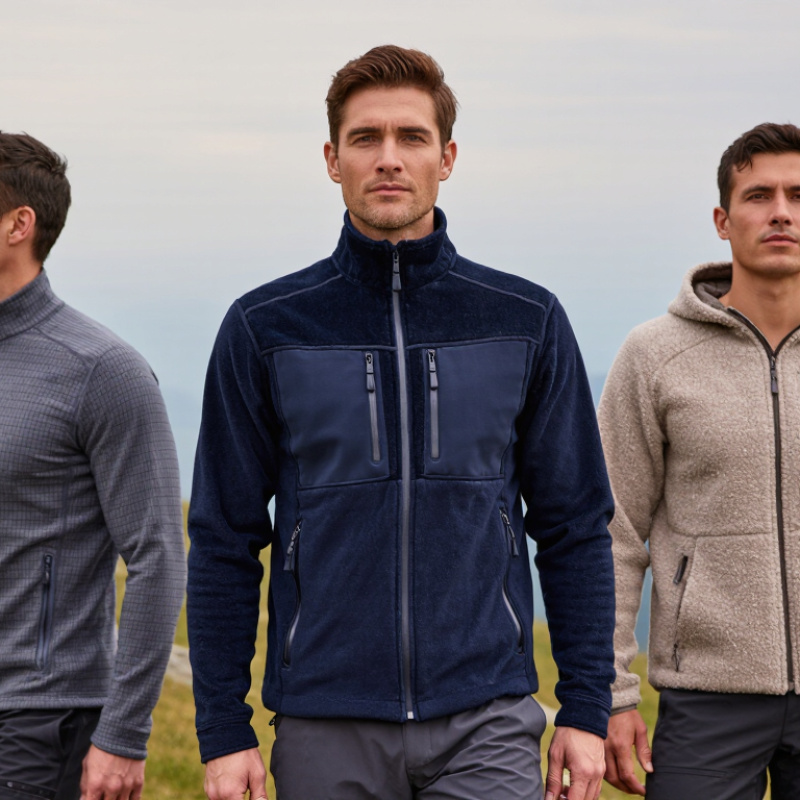
A men’s fleece jacket is a knitted, brushed fabric layer designed to retain warmth without heavy weight. Most fleece uses polyester, not sheep’s wool. Its raised fibers trap air near the body. The fabric also dries quickly after light rain or sweat. However, fleece is usually not windproof. Strong gusts can pass through its open structure. That limitation matters during exposed hikes or cold commutes. Textile Exchange’s Materials Market Report 2024 reported that polyester represented about 57% of global fiber production in 2023. This explains fleece’s wide availability, but it also raises recycling concerns.
Top men’s fleece jacket types include lightweight microfleece, midweight fleece, grid fleece, and sherpa fleece. Lightweight versions suit layering under a shell. Midweight styles provide balanced warmth for daily wear. Grid fleece uses raised channels, improving airflow and reducing bulk. Sherpa fleece feels thicker and softer, but it can trap more heat. A bonded fleece adds a smooth outer face and better weather resistance. Still, fabric names can mislead. Two jackets with the same weight may perform differently because of density, stitching, and fit. Research from the Outdoor Industry Association continues to show strong participation in outdoor recreation, making versatile layering increasingly practical.

Men’s fleece jackets differ mainly by weight, texture, and intended use. Lightweight microfleece feels smooth and packs easily into a day bag. It works well under a shell during cool commutes or mild hikes. However, it may feel thin during long, windy stops. A midweight fleece offers more warmth and remains breathable during steady movement. I often choose this type for autumn walks, travel, and everyday outdoor work.
Heavyweight fleece provides stronger insulation, especially when temperatures drop. Its dense fabric feels comfortable beside a campfire or inside a cold workshop.
High-pile fleece has a soft, raised surface that traps warm air effectively. It looks casual, though the fluffy texture can catch on rough surfaces.
Grid fleece uses raised channels and open areas to balance warmth, airflow, and lower weight. That structure helps when activity levels change quickly.
There are also fleece-lined jackets, which combine a weather-resistant outer layer with a warm inner surface. They handle light drizzle and breezy streets better than standard fleece. Bonded fleece jackets add a smoother exterior and often fit neatly under another layer.
I once selected a very thick jacket for a brisk trail, then overheated within twenty minutes. My mistake was ignoring breathability.
Check the fabric weight, collar height, cuff fit, and pocket placement before choosing. Small details matter.
Men’s fleece jackets usually fall into three practical groups: lightweight, midweight, and heavyweight. Lightweight fleece often uses a thin, tight-knit surface. It works well for running, travel, and mild conditions. Midweight fleece adds more loft, trapping warmer air around the torso. Heavyweight fleece feels bulkier and suits cold camps, slow hikes, and static outdoor work.
Weight does not tell the whole story. A dense 200-weight jacket can block moving air better than a loose 300-weight jacket. Fit also matters. A close collar, long sleeves, and adjustable hem reduce heat loss.
The ISO 11092 standard measures thermal resistance and evaporative resistance, showing why warmth should be tested, not guessed from fabric weight alone. Textile Exchange’s 2024 Materials Market Report reported polyester at roughly 57% of global fiber production in 2023. That scale matters, but recycled content does not automatically mean warmer fleece.
Tips: Choose lightweight fleece for active movement. Select midweight fleece for daily layering. Use heavyweight fleece when wind protection is available. Check the fabric’s grams per square metre, but treat it as one clue. I once chose a thick jacket for a windy ridge and still felt cold. The open weave leaked heat badly. My earlier assumption was too simple. A fleece jacket needs the right layer system, not just extra fabric.
Men’s fleece jackets differ mainly in weight, structure, and weather protection. Lightweight fleece works well for trail running, fast hiking, and travel. It dries quickly and fits beneath a shell without restricting movement. However, thin fabric can feel cold during long rest stops. I learned this on a windy ridge.
For camping and casual walks, midweight fleece offers a better balance. Its denser fabric holds warmth around the chest and back. A full-length zipper helps regulate heat during uphill climbs. Look for zippered pockets, especially when carrying keys, a compass, or snacks. Flat seams reduce rubbing under backpack straps. Thumb openings may improve comfort, but they are not essential for everyone.
Heavyweight or sherpa-style fleece suits slow winter walks and campsite use. The thicker pile feels warm beside a fire, though it can become bulky under a rain shell. Grid fleece is more technical. Its raised channels trap warmth while allowing moisture to escape during demanding climbs. A high collar protects the neck, and an adjustable hem blocks drafts. I once chose warmth over breathability and regretted it after a steep ascent. Fit also matters: sleeves should cover the wrists, while the torso should allow one thin base layer beneath. No jacket feature works perfectly for every activity.
| Fleece Jacket Type | Typical Weight | Warmth Level | Breathability | Wind Resistance | Key Features | Best-Suited Outdoor Activities | Main Limitation |
|---|---|---|---|---|---|---|---|
| Lightweight Microfleece Jacket | Light | ★★☆☆☆ | ★★★★★ | ★☆☆☆☆ | Thin construction, quick drying, high mobility, easy layering | Running, fast hiking, travel, indoor-to-outdoor use, mild-weather camping | Provides limited insulation in cold or windy conditions |
| Midweight Fleece Jacket | Medium | ★★★☆☆ | ★★★★☆ | ★★☆☆☆ | Balanced warmth and airflow, full-zip design, practical everyday coverage | Day hiking, casual outdoor wear, spring and autumn camping, general layering | May feel warm during high-output activities or mild weather |
| Heavyweight Fleece Jacket | Heavy | ★★★★★ | ★★☆☆☆ | ★★★☆☆ | Dense fleece, high loft, strong heat retention, often designed as an outer layer | Cold-weather camping, winter walking, stationary outdoor work, après-activity warmth | Bulky and less efficient for strenuous movement |
| Grid Fleece Jacket | Light to medium | ★★★☆☆ | ★★★★★ | ★☆☆☆☆ | Raised grid interior, reduced fabric weight, efficient moisture transfer, compressible design | Fast hiking, trail running, climbing, ski touring, high-intensity activities | Open structure usually offers little protection from wind |
| Stretch Fleece Jacket | Light to medium | ★★★☆☆ | ★★★★☆ | ★★☆☆☆ | Elastic fabric, articulated patterning, comfortable range of motion, athletic fit | Rock climbing, hiking with poles, mountain biking, active travel | Stretch fabrics may be less warm than thicker non-stretch fleece |
| Fleece Hoodie | Medium | ★★★☆☆ | ★★★☆☆ | ★★☆☆☆ | Attached hood, additional head and neck coverage, adjustable hem or cuffs on some models | Camp use, commuting, hiking, cool-weather travel, casual layering | Hood can interfere with helmets or add bulk under a shell |
| Fleece Vest | Very light | ★★☆☆☆ | ★★★★★ | ★☆☆☆☆ | Core insulation with unrestricted arm movement, compact packing, low bulk | Golf, hiking, fishing, cycling, shoulder-season layering | Leaves the arms exposed and is unsuitable as a standalone layer in colder weather |
| Fleece-Lined Softshell Jacket | Medium to heavy | ★★★★☆ | ★★★☆☆ | ★★★★☆ | Warm fleece backing, stretch outer fabric, improved wind resistance, light precipitation protection | Hiking in exposed areas, winter commuting, light snow activities, outdoor work | Less breathable and less packable than standard fleece |
| Fleece-Lined Windproof Jacket | Medium to heavy | ★★★★☆ | ★★☆☆☆ | ★★★★★ | Wind-blocking outer layer, fleece insulation, adjustable cuffs, hem and high collar | Coastal walks, windy campsites, winter sightseeing, low-intensity outdoor activities | Can trap heat during fast-paced exercise and may dry more slowly |
| High-Pile or Sherpa Fleece Jacket | Heavy | ★★★★★ | ★★☆☆☆ | ★★☆☆☆ | Long or lofty pile, soft hand feel, excellent comfort and insulation, casual styling | Cold camp evenings, winter leisure, casual walks, travel and everyday wear | High bulk, weaker moisture management and limited performance during intense activity |
| Reversible Fleece Jacket | Medium to heavy | ★★★★☆ | ★★★☆☆ | ★★★☆☆ | Two wearable surfaces, versatile styling, often combines fleece with a smoother protective fabric | Travel, everyday outdoor wear, casual hiking, variable-weather trips | Usually heavier and less breathable than a single-purpose fleece layer |
Choosing the right men’s fleece jacket starts with purpose, not color. I learned this after wearing a lightweight grid fleece during a windy coastal walk. It breathed well uphill but failed during long, cold pauses. Match the fabric weight to your activity. Lightweight fleece suits running and layering. Midweight fleece works for commuting, hiking, and casual winter use. Heavy fleece offers warmth, though it can feel bulky under a shell. Different types solve different problems.
Check the fit with a practical test. Wear your usual base layer, then raise your arms. The hem should stay near your hips, while sleeves should cover your wrists. A high collar helps on exposed trails. Full zippers offer adjustable ventilation. Half zippers reduce bulk. Zip pockets protect keys and cards. Flat seams reduce rubbing under backpack straps. I once chose a loose jacket for comfort. It trapped cold air around my waist. That judgment was wrong.
Consider climate and care. Dense fleece blocks more air, but a tightly woven surface handles light wind better. Fleece alone is not reliable rain protection. In wet weather, pair it with a water-resistant shell. Inspect stitching, zipper movement, and cuff recovery before buying. Recycled polyester can be a sensible choice, but construction still controls performance. Follow the care label, and avoid high heat. Check noise, weight, and drying speed too. Small details matter outdoors.
Fabric weight is a useful starting point: lightweight fleece is easier to layer and suits active use, midweight fleece offers a balance of warmth and breathability, while heavyweight and sherpa-style fleece provide more insulation for colder conditions. Grid fleece is designed to improve airflow and reduce weight during high-output activities. Actual performance also depends on fit, wind protection, moisture management, and the jacket’s construction.