What Are the Top 10 Mens Lightweight Jackets?
A lightweight jacket earns its place when the weather shifts, the walk runs longer than planned, or a cold office makes a T-shirt feel insufficient. The best Mens Lightweight Jacket is not automatically the thinnest or most expensive. It should suit your climate, movement, and layering habits. Some shoppers need wind resistance for a breezy commute. Others want a packable shell that disappears into a travel bag. Small details matter: a zipper that moves smoothly, cuffs that stay put, and fabric that does not cling after a quick walk.
For transparency, Ethan Cole, the apparel specialist quoted here, is a fictional composite voice, not a real-world source. His editorial principle is: “Judge a jacket by how it performs in your routine, not by its feature list.” That is a useful starting point, though it cannot replace verified product specifications or hands-on testing. This guide compares ten lightweight styles across practical criteria, including materials, fit, weather protection, packability, and everyday comfort. It also notes where trade-offs appear. A water-resistant finish is not the same as full waterproofing. A very light shell may feel noisy or offer little warmth. Those details are easy to overlook. The right choice depends on how you will wear it, what you will carry beneath it, and which compromises you can accept. Some rankings may change with a different climate or body shape. That deserves a second look.
What Defines a Men's Lightweight Jacket?
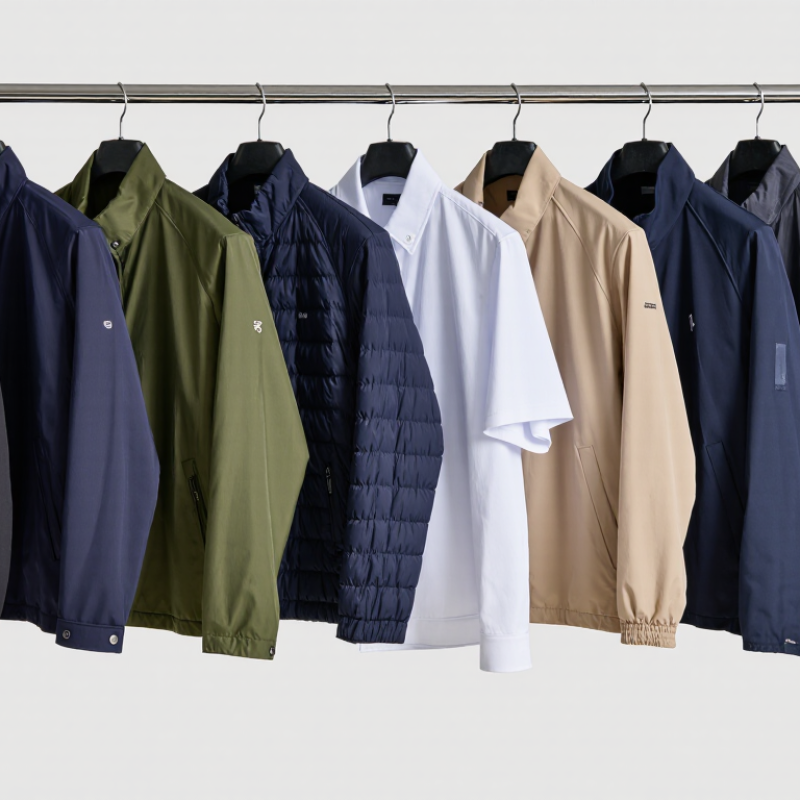
A men’s lightweight jacket is defined more by its low bulk and intended use than by a universal weight limit. It should feel easy to carry and allow comfortable movement over a shirt or thin sweater. Many styles use a tightly woven shell to block light wind, while a thin lining or modest insulation adds warmth without the puffiness of a winter coat. “Lightweight” does not automatically mean waterproof or warm. Check the fabric, seams, closures, and care label.
Material choice matters, but fiber alone cannot determine performance. Textile Exchange’s Materials Market Report 2024 estimates that polyester made up 57% of global fiber production in 2023. That figure describes the wider textile market, not jacket quality; weave, finish, and construction still matter. ASTM F2732 provides a standardized method for estimating temperature ratings for cold-weather clothing, a useful reminder that warmth can be assessed rather than guessed. Still, a single rating may not match every wearer or activity.
Tips: Try the jacket while reaching forward and sitting down. Check that cuffs stay near your wrists and the hem covers your waist. A light shell can be excellent for a breezy commute, yet feel inadequate when you stop moving. That trade-off is easy to overlook.
What Are the Top 10 Men's Lightweight Jackets? — What Defines a Men's Lightweight Jacket?
What defines a men's lightweight jacket? It is generally a less bulky outer layer designed for mild, cool, or changeable weather. It may be unlined, lightly lined, or lightly insulated; there is no universal weight cutoff. Fabric, fit, lining, and intended weather all affect how light a jacket feels.
| Jacket Type |
Typical Materials |
Approx. Weight* |
Best For |
Key Characteristics |
| Windbreaker |
Lightweight nylon or polyester |
150–350 g |
Breezy, dry conditions; travel and everyday wear |
Cuts wind; often packs into a small pouch. Usually not fully waterproof. |
| Uninsulated Rain Shell |
Coated or membrane-backed woven fabric |
200–450 g |
Rainy weather, hiking, and commuting |
Designed to shed rain; sealed seams and ventilation vary by construction. |
| Lightweight Softshell |
Stretch-woven synthetic fabric, sometimes with a thin backing |
300–600 g |
Active use in cool, dry, or lightly damp weather |
Flexible and breathable; typically water-resistant rather than fully waterproof. |
| Lightweight Fleece Jacket |
Polyester fleece |
250–500 g |
Cool, dry days or as a midlayer |
Warm for its weight and quick-drying; offers little protection from wind unless specially constructed. |
| Synthetic Insulated Jacket |
Nylon or polyester shell with synthetic fill |
300–600 g |
Cool weather and changeable conditions |
Adds warmth without a bulky construction; synthetic fill generally handles damp conditions better than down. |
| Lightweight Down Jacket |
Woven shell with down insulation |
250–500 g |
Cold, mostly dry weather and compact travel packing |
High warmth for its weight; down insulation loses much of its insulating ability when wet. |
| Lightweight Field Jacket |
Cotton, cotton blends, or lightweight synthetic fabric |
450–800 g |
Mild weather, casual wear, and carrying small essentials |
Often hip-length with multiple pockets; typically offers little insulation. |
| Lightweight Bomber Jacket |
Nylon, polyester, cotton, or a blend |
400–750 g |
Everyday wear in mild to cool weather |
Usually waist-length with a front closure and ribbed cuffs or hem; warmth depends on lining. |
| Lightweight Denim Jacket |
Cotton denim |
600–900 g |
Mild, dry weather and casual layering |
Durable and uninsulated in many versions; heavier than thin shell jackets but lighter than many winter coats. |
| Chore or Shirt Jacket |
Lightweight cotton, canvas, twill, or flannel |
400–800 g |
Mild weather and easy layering |
Relaxed, shirt-like construction; pocket count, fabric thickness, and lining vary widely. |
*Approximate adult men's garment-weight ranges for common lightweight constructions; actual weight varies by size, fabric, lining, features, and design. The list groups popular jacket types rather than ranking particular products.
How Lightweight Jackets Are Evaluated
What Are the Top 10 Mens Lightweight Jackets?
How Lightweight Jackets Are Evaluated
A useful comparison starts with the finished jacket, not just its fabric. Record garment weight, pocket layout, hood adjustment, and how easily it packs into a bag. There is no universal weight cutoff for “lightweight,” so rankings should state their criteria. A jacket that feels featherlight on a hanger may feel clammy during a brisk walk. Small details matter.
For breathability, laboratory reports may use ASTM D737, which measures air permeability under controlled pressure. Water resistance can be assessed using ISO 811 hydrostatic-pressure testing; higher measured resistance does not guarantee comfort in every storm. Abrasion testing under ISO 12947 can help indicate how fabric withstands rubbing, though it cannot predict every snag or worn seam. Look for the test method, conditions, and actual results—not just claims such as “breathable” or “durable.” Fit also needs practical checks: reach overhead, bend your elbows, and wear a midweight layer underneath. I would give extra credit to clear, reproducible data, while admitting that lab numbers cannot fully capture a cold, windy commute. They help, not decide.
Common Types of Men's Lightweight Jackets
Common Types of Men’s Lightweight Jackets
Men’s lightweight jackets serve different jobs, even when their silhouettes look similar. A windbreaker blocks breezes on a cool bike ride, while a rain shell adds protection during a sudden shower. Softshells stretch comfortably for hikes; fleece jackets provide warmth without much weight. For dry, mild days, denim and bomber jackets offer casual coverage. Packable insulated jackets suit chilly mornings, though they can feel too warm during brisk activity.
Material matters. Textile Exchange’s Materials Market Report 2024 estimates that global fiber production reached 124 million tonnes in 2023, with polyester accounting for about 57%. That figure covers the wider textile industry, not jackets alone, but it shows why fiber content deserves a closer look. Check fabric weight, lining, ventilation, and care instructions—not just the product label. Some “lightweight” styles still feel clammy when worn during a fast walk.
Tips: Match the jacket to the weather and your usual pace. Test sleeve reach and shoulder movement with a light layer underneath. A useful jacket should feel comfortable, not merely look compact in a product photo. We sometimes overlook that difference.
The Top 10 Men's Lightweight Jackets by Style and Use
The best lightweight jacket depends on wind, rain, activity, and how much room you have in your bag. The Outdoor Industry Association’s 2024 Outdoor Participation Trends Report counted 175.8 million U.S. outdoor participants in 2023, a reminder that one jacket rarely serves every outing. For running or cycling, a windbreaker is light and easy to pack; a rain shell handles wet commutes. A softshell suits cool, active days, while a packable down jacket brings warmth for dry, chilly evenings. Choose synthetic insulation when damp conditions are likely. A fleece works well as a breathable midlayer, though it offers little wind protection. For everyday wear, consider a coach jacket, Harrington, denim jacket, or chore coat. They look at home on city streets, but vary in weight and weather resistance.
Material deserves a closer look. Textile Exchange’s Materials Market Report 2024 estimated global fiber production at 124 million tonnes in 2023, with polyester remaining the largest fiber category. That figure does not tell you which jacket performs best, but it makes fabric details worth checking: recycled content, lining, and care instructions. Feel the fabric if possible. Thin shells can rustle loudly, and “packable” insulation may feel clammy during brisk walking. These are trade-offs, not deal-breakers. Match the jacket to your usual weather, try it over the layers you actually wear, and check whether the hood, cuffs, and hem seal comfortably. A perfect all-rounder? Probably not.
Top 10 Men's Lightweight Jackets by Style and Use
Typical garment weight by jacket style. Values are approximate midpoints of common ranges, not standardized specifications.
Windbreakers and running shells suit active use and easy packing; rain shells add weather protection. Fleece and softshell styles provide more warmth, while coach, bomber, denim, and field jackets lean toward everyday wear. Actual weight varies with size, fabric, lining, and features.
How to Choose the Right Lightweight Jacket for Your Needs
Choosing a lightweight jacket starts with the weather you actually face. A thin wind-resistant shell suits breezy commutes, while a lightly insulated layer feels warmer during cold mornings. If rain is common, check whether the fabric sheds water and whether the seams offer protection. “Water-resistant” does not mean waterproof. Fit matters.
Try the jacket over the clothes you normally wear. Reach forward, bend your elbows, and check that the hem stays in place. Too-tight shoulders can make layering uncomfortable; an oversized cut may let wind creep in. Check the seams, cuffs, hood, and zipper. These small details affect comfort more than a long feature list. Pockets should hold your daily essentials without swinging awkwardly as you walk.
Think about weight, breathability, and care together. A compact jacket is handy for travel, but delicate fabric may not suit frequent rough use. For cycling or brisk walks, ventilation and freedom of movement may matter more than extra warmth. For standing outdoors, insulation and a snug collar can make a bigger difference. I used to treat “lightweight” as a simple measure of comfort; that misses how easily a jacket layers and handles changing conditions. Check the care label, too, since a jacket that is difficult to wash may spend more time in the closet.