Top Insights on Germany Textile Industry Trends and Innovations?
The Germany Textile Industry is undergoing significant transformations. Innovations and trends are shaping its future. Sustainability continues to play a crucial role. Companies are now prioritizing eco-friendly materials and production methods. This shift reflects changing consumer preferences and market demands.
Additionally, technology is revolutionizing textile production. Advanced machinery and automation enhance efficiency. Digital printing and smart textiles are emerging trends. These innovations not only improve quality but also reduce waste. However, challenges remain in integrating these technologies effectively. Skill gaps and investment costs can hinder progress.
Collaboration within the industry is paramount. Partnerships with tech firms and research institutions boost innovation. Yet, there is a need for greater communication and knowledge sharing. The landscape is promising, but continuous adaptation is essential. The evolving Germany Textile Industry presents both opportunities and obstacles for stakeholders.
Current Market Size and Growth Rate of Germany's Textile Industry
The textile industry in Germany exhibits a dynamic landscape, with a current market size valued at approximately €26 billion. As of 2023, the industry has seen a growth rate of around 2% annually. This consistent growth reflects a robust demand for both traditional textiles and innovative materials.
Moreover, sustainability plays a pivotal role in shaping trends. Consumers increasingly favor eco-friendly products, pushing companies to adopt green practices. Reports show that around 30% of German textile firms are investing in sustainable technologies. Innovations such as biodegradable fibers and recycling processes are gaining traction, demonstrating a shift in production methods.
While the market is thriving, challenges remain. Supply chain disruptions, particularly post-pandemic, pose significant risks. Rising raw material costs and labor shortages also add pressure. Companies need agile strategies to navigate these hurdles effectively. Addressing these challenges is crucial for maintaining the industry’s upward trajectory in an evolving global context.
Top Insights on Germany Textile Industry Trends and Innovations
| Category |
Current Market Size (2023) |
Growth Rate (CAGR %) |
Key Trends |
| Textile Manufacturing |
€25 billion |
3.2% |
Sustainability initiatives |
| Technical Textiles |
€15 billion |
5.0% |
Innovation in composites |
| Fashion and Apparel |
€20 billion |
2.5% |
Digital transformation |
| Home Textiles |
€10 billion |
4.1% |
Smart textiles |
| Textile Recycling |
€5 billion |
6.3% |
Circular economy |
Key Trends Influencing Sustainability in Textile Manufacturing
The textile industry in Germany is undergoing significant transformations, particularly in sustainability practices. Approximately 66% of textile manufacturers are prioritizing circular economy principles to reduce waste. This shift aligns with global trends where eco-friendly materials gain traction. Data from industry reports indicate that by 2025, the market for sustainable textiles will be valued at over €12 billion.
Innovations in textile manufacturing reflect this shift towards sustainability. The integration of digital technologies has allowed companies to track product lifecycles more effectively. For example, blockchain technology is being tested for traceability, enabling consumers to see the origins of their garments. However, challenges remain, especially in scaling these technologies to all industry players.
Despite the progress, many companies still grapple with sustainable practices' additional costs. A study found that about 30% of manufacturers hesitate to invest due to financial constraints. This situation calls for a reevaluation of funding strategies to support sustainable innovations. There’s a clear need for collaboration across the industry to address these barriers effectively.
Innovations in Smart Textiles and Their Impact on the Industry
The textile industry in Germany is witnessing a significant shift towards smart textiles. These innovative materials integrate technology into fabrics, enabling advanced functionalities. For instance, some textiles can now monitor health metrics like heart rate or body temperature. This capability offers immense potential in healthcare and sports sectors, making textiles more than just clothing.
However, the incorporation of technology into textiles also presents challenges. Developing these smart materials requires expertise in both textiles and electronics. The manufacturing processes can be complex, posing hurdles for traditional textile producers. Additionally, consumer acceptance of wearable tech remains an ongoing concern. Many individuals are still wary of integrating technology into their everyday clothing.
Despite these hurdles, the future of smart textiles appears promising. Innovations in this field are rapidly evolving. Research is focusing on enhancing durability and comfort while ensuring functionality. This blend of technology and textile highlights the importance of adaptability in an ever-changing market. As the industry grows, stakeholders must also address sustainability and ethical concerns associated with new materials and processes.
Emerging Technologies: Automation and Digital Transformation in Textiles
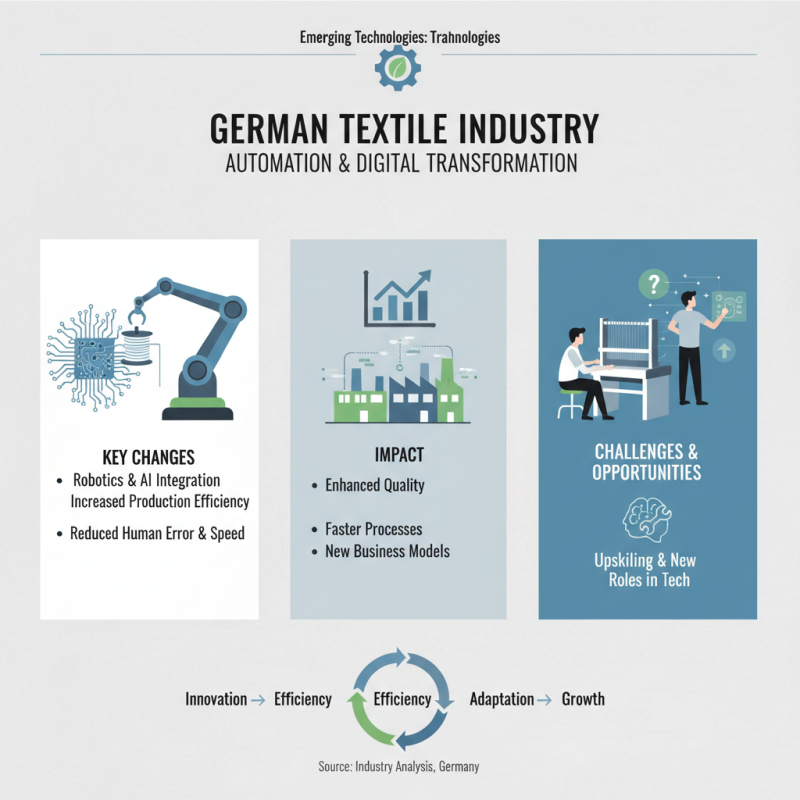
The textile industry in Germany is undergoing a significant transformation. Automation and digital technologies are at the forefront of this change. Factories are now integrating robotics and AI, enhancing production efficiency. These technologies reduce human error and speed up processes. However, there are concerns about job displacement. Workers must upskill to adapt to new roles in a tech-driven environment.
Digital transformation is reshaping how companies operate. Supply chains are becoming more transparent through IoT devices. Real-time data analysis improves decision-making. Yet, implementing these technologies is complex and costly. Many small and medium enterprises struggle with the initial investment. They require guidance and support to navigate this digital landscape.
Innovation in textiles also includes sustainable practices. Companies are exploring eco-friendly materials and processes. This shift is essential for reducing environmental impact. Nonetheless, balancing sustainability with profitability remains challenging. The industry must find solutions that align both goals effectively. As the German textile sector continues to evolve, fostering a culture of adaptability will be crucial for future success.
Consumer Behavior Shifts and Their Effects on Textile Design and Production
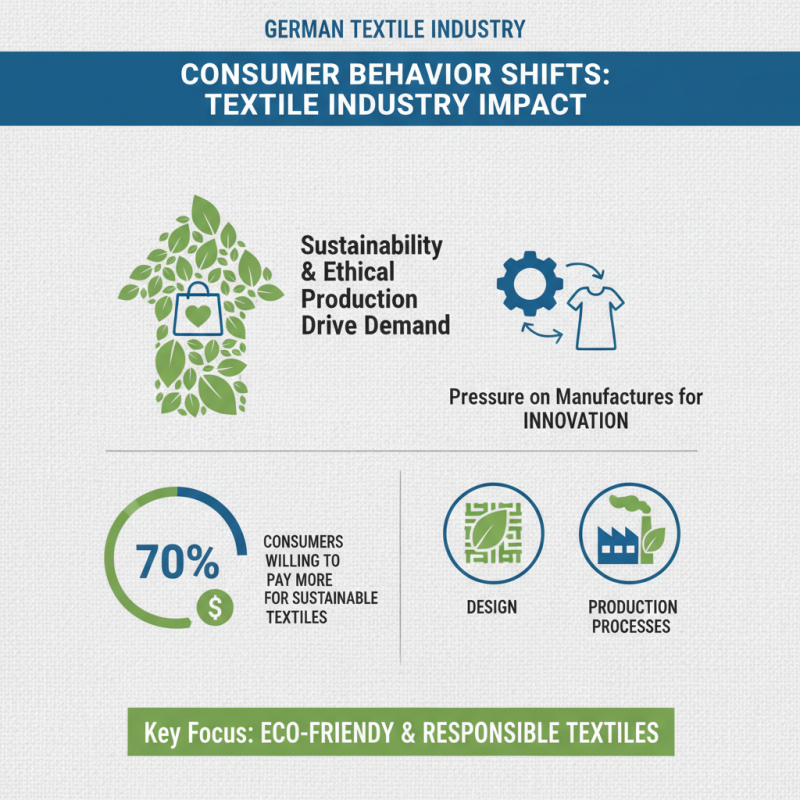
Shifts in consumer behavior are dramatically impacting the German textile industry. Recent studies show that sustainability and ethical production are now key factors for buyers. In fact, about 70% of consumers are willing to pay more for sustainable textiles. This demand pressures manufacturers to innovate in design and production processes.
One clear example is the rise of eco-friendly materials. Brands are increasingly incorporating organic cotton, recycled polyester, and other sustainable resources into their product lines. This shift aligns with the growing awareness of environmental issues among consumers. A report from the Textile Industry Research Institute indicates that the market for sustainable textiles is expected to grow by 9.7% annually until 2028.
Tips for textile designers: Focus on storytelling. Today's consumers value transparency. Highlight the materials used and the production processes. This builds trust. Engage with your audience through social media. Use visuals to showcase material sourcing and production efforts. Remember, authenticity matters.
However, the transition is not without challenges. Manufacturers face higher costs when sourcing sustainable materials. These expenses can impact price points and profit margins. Reflecting on this dilemma is vital for long-term success. Balancing sustainability with economic viability remains a complex issue.